Tech
How Revolut Is Turning India Into Its Global GCC Powerhouse


Global fintech company Revolut is making a decisive move that reflects a larger shift in the Global Capability Center (GCC) landscape — placing India at the core of its global operations strategy.
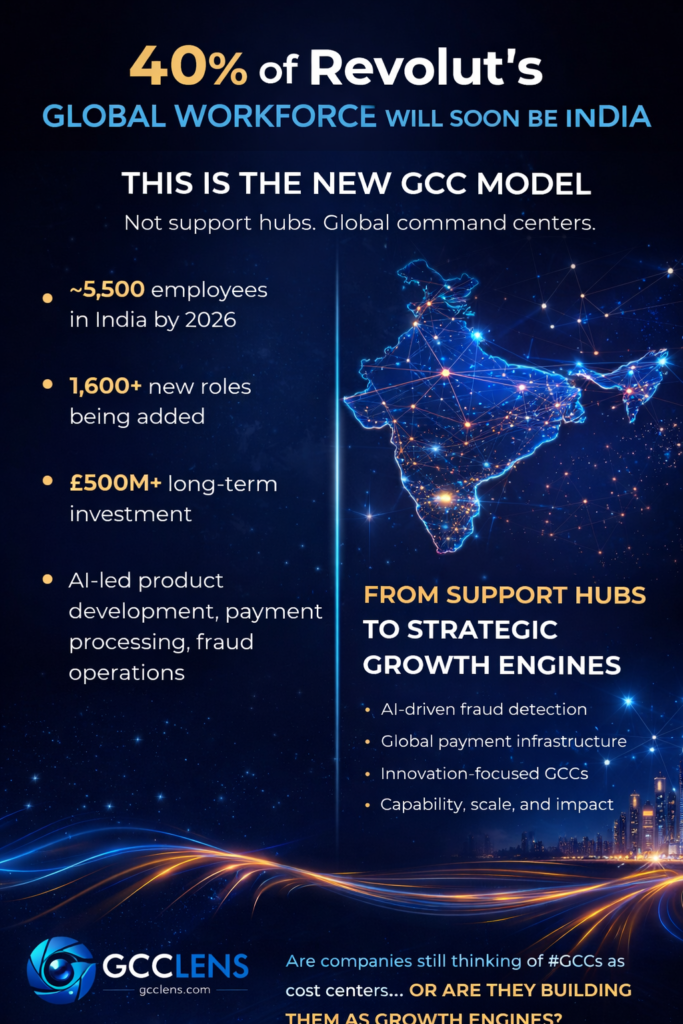
India to Host 40% of Revolut’s Global Workforce
By the end of 2026, Revolut plans to base around 40% of its global workforce in India, signaling a major expansion of its GCC footprint. With a current global headcount of approximately 12,000 employees, this move will significantly increase India’s share in the company’s operations.
To support this growth, the company will add nearly 1,600 new roles, taking its India workforce to about 5,500 employees.
💼 From Support Hub to Strategic Core
This expansion is not just about scale — it reflects a structural shift in how GCCs operate.
Revolut’s India center will handle:
- Product development
- Customer and operational support
- Payment processing
- Fraud detection and investigations
These are business-critical functions, not traditional back-office roles, reinforcing India’s evolution into a high-value innovation hub.
🤖 AI, Automation & Global Operations
India already plays a significant role in Revolut’s global ecosystem:
- Around one-third of company processes are managed from India
- Key functions include transaction monitoring and AI-driven alerts
- Innovations like video-based KYC systems developed in India are being deployed globally
This highlights how GCCs are now contributing to global product and technology innovation, not just execution.
💰 Long-Term Investment Commitment
Revolut has committed £500 million (approx. $670 million) toward its India business and GCC expansion over five years.
This level of investment underscores India’s role as a long-term strategic hub, driven by:
- Deep talent pool
- Strong technical capabilities
- Cost-to-value advantage
🌍 GCC Expansion vs India Market Entry
Interestingly, Revolut’s GCC growth is separate from its India market entry strategy.
While the company is preparing to launch its financial products in India, the GCC is focused purely on supporting global operations and scaling capabilities worldwide.
📊 What This Means for the GCC Ecosystem
Revolut’s move reflects broader industry trends:
1. GCCs are becoming global command centers
Companies are centralizing core operations in India, not just outsourcing tasks.
2. Talent is the biggest driver
India is being recognized as one of the deepest global talent markets.
3. Innovation is shifting to GCCs
AI, automation, and product innovation are increasingly GCC-led.
4. Scale + Strategy = New GCC Model
This is no longer about cost savings — it’s about building global capability at scale.
🔍 Final Take
Revolut’s India expansion is more than a hiring plan — it’s a blueprint for the next generation of GCCs.
As global companies rethink operating models, India is rapidly transitioning from a support destination to a strategic growth engine powering global business outcomes.

Global Software Leader Expands India Presence with Strategic Bengaluru Hub
N-able, a leading provider of IT management, cybersecurity, and data protection solutions, has announced the opening of its new office in Bengaluru, strengthening its commitment to innovation, product development, and global talent expansion.
The new facility is expected to serve as a strategic hub for engineering, technology development, customer success, and business operations, enabling the company to tap into India’s world-class technology talent ecosystem while supporting its global growth ambitions.
Bengaluru Chosen for Its Deep Technology Talent Pool
Bengaluru continues to attract multinational technology companies seeking access to highly skilled professionals across software engineering, cloud computing, artificial intelligence, cybersecurity, and digital transformation.
By establishing a larger presence in India’s technology capital, N-able aims to accelerate product innovation, enhance customer experiences, and strengthen collaboration across its global teams.
The move reflects the company’s long-term investment strategy in regions that can support both innovation and scalable business operations.
Supporting Global Innovation and Product Development
The Bengaluru office will play a critical role in advancing N-able’s mission of delivering cutting-edge solutions for managed service providers (MSPs) and IT professionals worldwide.
The center is expected to contribute across several key functions, including:
- Software engineering and product development
- Cybersecurity innovation
- Cloud platform operations
- Customer success and technical support
- Data analytics and business intelligence
- Global business operations
These capabilities will help N-able continue delivering innovative solutions that address the evolving needs of businesses managing increasingly complex IT environments.
India’s Growing Importance in Global Technology Operations
The expansion highlights India’s increasing significance as a destination for technology-focused Global Capability Centres and innovation hubs. Global organizations are leveraging the country’s strong engineering ecosystem, digital expertise, and rapidly growing talent base to accelerate innovation and business transformation.
Bengaluru, in particular, has emerged as one of the world’s leading centers for technology research, product engineering, and software development, making it an ideal location for companies looking to scale global operations.
Creating Opportunities for Technology Professionals
The new office is expected to support N-able’s talent growth initiatives by creating opportunities for software engineers, cybersecurity specialists, cloud professionals, product managers, and customer success teams.
As organizations continue investing in digital-first business models, demand for specialized technology talent remains strong, positioning Bengaluru as a critical growth market for global enterprises.
Outlook
N-able’s Bengaluru expansion reinforces a broader trend of global technology companies deepening their investments in India to access innovation, talent, and operational excellence. As the company continues to scale its global footprint, the new office will serve as an important center for product innovation, collaboration, and long-term business growth.
Data Source : Link

Global automation leader Redwood Software has expanded its international footprint by launching a new technology centre in Hyderabad, reinforcing India’s position as a strategic hub for Global Capability Centers (GCCs).
A Strategic Move into India’s GCC Ecosystem
The newly established centre in Hyderabad marks a significant milestone in Redwood Software’s global expansion strategy. The company aims to leverage India’s deep talent pool in software engineering, automation, and enterprise technology to accelerate innovation and deliver scalable solutions to global clients.
Hyderabad continues to emerge as a preferred destination for multinational corporations building GCCs, thanks to its mature IT ecosystem, strong infrastructure, and access to highly skilled professionals. Redwood’s entry further validates the city’s growing prominence in the global tech landscape.
Focus on Automation and Cloud Innovation
Redwood Software specializes in automation solutions that streamline enterprise operations, particularly in areas such as finance, IT, and business process automation. The Hyderabad centre will play a critical role in advancing the company’s cloud-native automation platform and enhancing product development capabilities.
The facility is expected to support:
- Advanced product engineering
- Cloud and SaaS innovation
- AI-driven automation development
- Global customer support and delivery
This aligns with the broader trend of GCCs evolving beyond support functions into high-value innovation and R&D hubs.
Talent-Led Expansion Strategy
India remains central to Redwood’s growth roadmap due to its strong engineering talent base. The Hyderabad centre will focus on hiring skilled professionals across software development, DevOps, data engineering, and enterprise automation domains.
This move reflects a larger shift among global firms—from cost arbitrage to capability-driven investments—where GCCs are built to drive innovation, not just efficiency.
Strengthening Global Delivery Capabilities
With this new centre, Redwood Software aims to enhance its ability to deliver seamless, round-the-clock services to its global customer base. The India team will collaborate closely with international counterparts, ensuring faster deployment cycles and improved customer experience.
The expansion also enables Redwood to scale its operations efficiently while maintaining agility in product innovation and service delivery.
Hyderabad’s Growing GCC Momentum
Hyderabad has steadily attracted global enterprises setting up GCCs across sectors such as fintech, healthcare, SaaS, and manufacturing. Factors contributing to this growth include:
- Strong government support and policies
- World-class IT infrastructure
- Competitive operating costs
- A thriving startup and innovation ecosystem
Redwood Software’s investment adds to this momentum, positioning the city as a critical node in the global automation and enterprise technology network.
What This Means for the GCC Landscape
Redwood’s Hyderabad centre highlights a key evolution in the GCC model:
- From back-office operations to innovation hubs
- From cost centers to strategic value creators
- From local execution to global product ownership
As more companies follow this path, India’s GCC ecosystem is set to play an even larger role in shaping global technology and digital transformation initiatives.
Source : Link
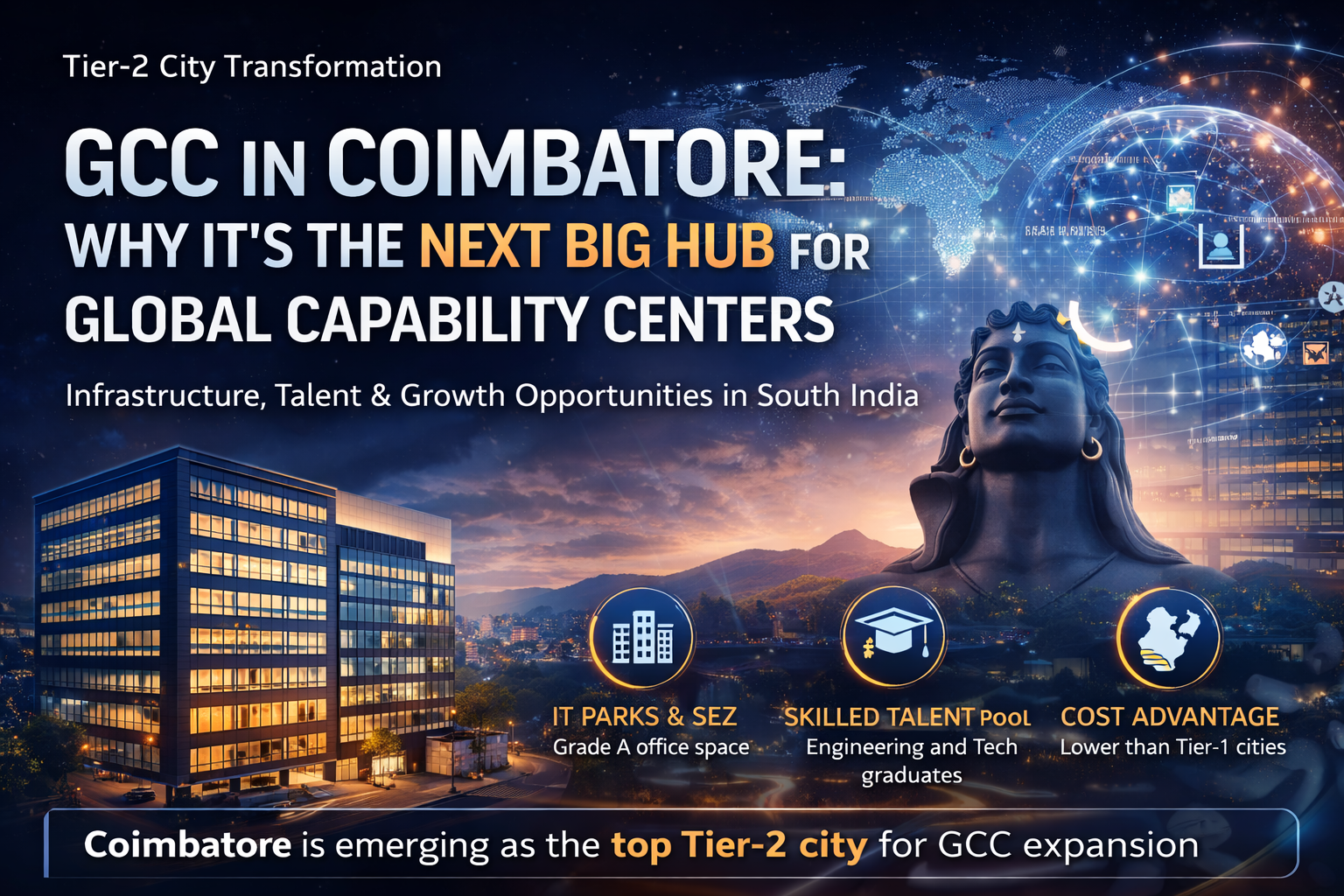
India’s Global Capability Center (GCC) ecosystem is undergoing a structural transformation. While cities like Bengaluru, Hyderabad, and Pune have traditionally dominated the landscape, Tier-2 cities are rapidly emerging as the next frontier. Among them, Coimbatore stands out as a high-potential destination for GCC expansion.
With its strong industrial base, growing IT ecosystem, cost advantages, and talent availability, Coimbatore is uniquely positioned to become a strategic GCC hub for global enterprises.
This article outlines a comprehensive GCC development plan for Coimbatore, covering infrastructure, talent strategy, policy support, and long-term growth opportunities.
Why Coimbatore? The Strategic Advantage
Coimbatore is not just another Tier-2 city—it is a hybrid economic zone combining manufacturing strength with IT and services growth.
Key Advantages:
- Strong engineering and manufacturing ecosystem
- Growing IT and software services presence
- Lower operational and real estate costs (30–50% lower than Tier-1 cities)
- Access to skilled graduates from top institutions
- Improved connectivity and infrastructure
This combination creates a cost-to-capability advantage, making Coimbatore highly attractive for GCCs.
The Rising Role of Tier-2 Cities in GCC Expansion
The GCC model is evolving beyond cost arbitrage.
Key Trends Driving Expansion:
- Talent saturation in Tier-1 cities
- Rising employee costs and attrition
- Demand for distributed global delivery models
- Government push for regional economic development
Coimbatore fits perfectly into this shift, offering scalability without the constraints of metro cities.
Infrastructure Development Plan
A successful GCC ecosystem depends heavily on infrastructure readiness.
1. IT Parks & SEZ Expansion
- Expansion of ELCOT IT parks
- Development of new Grade A office spaces
- Plug-and-play infrastructure for faster GCC setup
2. Connectivity Enhancements
- Upgrading Coimbatore International Airport
- Improved road connectivity (NH corridors)
- Better intra-city transport systems
3. Smart City Integration
- Digital infrastructure (5G readiness)
- Smart utilities and urban planning
- Sustainable energy adoption
Talent Development Strategy
Talent is the backbone of any GCC.
1. Academic-Industry Collaboration
- Partnerships with engineering colleges
- Curriculum aligned with GCC requirements
- Internship and apprenticeship programs
2. Skill Development Programs
- Focus on AI, data analytics, cloud, and cybersecurity
- Government-supported skilling initiatives
- Certification-driven learning pathways
3. Talent Retention Strategy
- Competitive salaries with lower cost of living
- Better work-life balance compared to metros
- Strong local hiring ecosystem
Technology & Innovation Focus
Modern GCCs are innovation hubs—not just delivery centers.
Key Focus Areas:
- Artificial Intelligence & Machine Learning
- Robotic Process Automation (RPA)
- Fintech and SaaS product development
- IoT and Industry 4.0 (leveraging Coimbatore’s manufacturing base)
Innovation Enablement:
- Setting up innovation labs and incubators
- Encouraging startup-GCC collaboration
- Promoting R&D investments
Government & Policy Support
Government backing is critical for GCC growth.
Key Initiatives:
- Tax incentives for IT and GCC companies
- Simplified regulatory frameworks
- Single-window clearance systems
- Infrastructure subsidies
Tamil Nadu government’s focus on decentralized IT growth positions Coimbatore as a priority city.
Industry Opportunities for GCCs in Coimbatore
Coimbatore’s strengths align well with multiple industries:
1. Manufacturing & Engineering GCCs
- Supply chain optimization
- Product engineering
- Industrial automation
2. BFSI & Fintech GCCs
- Risk analytics
- Payment systems
- Compliance operations
3. Healthcare & MedTech
- Health data analytics
- Telemedicine platforms
- Medical device R&D
4. SaaS & IT Services
- Product development
- Customer success operations
- Global support centers
Economic Impact of GCC Growth
A well-executed GCC strategy can transform Coimbatore’s economy.
Expected Outcomes:
- Job creation (10,000+ high-value roles in 5–7 years)
- Increase in real estate demand
- Growth of ancillary industries
- Rise in startup ecosystem
GCC Setup Roadmap for Companies
For enterprises planning a GCC in Coimbatore:
Phase 1: Market Entry
- Feasibility study
- Location selection
- Talent mapping
Phase 2: Setup
- Office infrastructure
- Hiring core leadership
- Initial team onboarding
Phase 3: Scale
- Expand functions
- Build innovation capabilities
- Integrate with global operations
Challenges & Mitigation Strategies
Challenges:
- Limited global exposure compared to Tier-1 cities
- Initial talent readiness gaps
- Perception as a non-metro location
Solutions:
- Strong employer branding
- Training and upskilling programs
- Strategic partnerships with universities
Future Outlook
Coimbatore is on track to become a top Tier-2 GCC destination in India.
With the right investments in:
- Infrastructure
- Talent
- Policy
The city can evolve into a global hub for innovation, technology, and operations.
Final Take
The GCC opportunity in Coimbatore is not just about expansion—it’s about strategic transformation.
Companies that invest early will gain:
- Cost advantages
- Talent access
- Long-term scalability
The next wave of GCC growth will not be limited to metros.
It will be built in cities like Coimbatore.
-

 Business6 months ago
S&P Global Expands India Footprint with New Gurugram Hub
-

 Bengaluru7 months ago
Abercrombie & Fitch Enters India’s GCC Landscape with Bengaluru Launch
-
 Politics7 months ago
Maximus Expands Hyderabad GCC: Strengthening India’s Role in Global Healthcare & Public Sector Operations
-

 Press Release6 months ago
KnowVisory Global Launches Payroll Processing and Administration Services to Simplify Compliance for Growing Businesses
-

 Bengaluru5 months ago
Commonwealth Bank Appoints Shubha Iyer as CEO of CommBank India to Strengthen GCC and Digital Transformation Strategy
-

 New GCC4 months ago
Generac Launches First India Global Capability Center in Pune
-

 Bengaluru3 months ago
DePuy Synthes Selects Bengaluru for New GCC, Targets 500 Hires
-

 Business7 months ago
GCC in Coimbatore: Why It’s the Next Big Hub for Global Capability Centers