
New GCC
India’s Office Market in 2026: How GCCs and Flex Spaces Are Driving Unstoppable Growth


India’s commercial real estate market is entering a new growth cycle in 2026, and despite global economic uncertainty, the outlook remains strongly positive.
What’s powering this resilience?
👉 Global Capability Centers (GCCs)
👉 Flexible workspace adoption
👉 Demand for future-ready, tech-enabled offices
Together, these factors are reshaping India into a global office demand powerhouse.
Strong Demand Despite Global Headwinds
Even with geopolitical tensions and global economic slowdowns, India’s office market is expected to remain robust and stable in 2026.
- Total office demand projected at 70–75 million sq. ft.
- New supply expected at 60–65 million sq. ft.
This indicates a healthy absorption rate, signaling sustained occupier confidence in India as a long-term business destination.
GCCs: The Primary Growth Engine
Global Capability Centers are no longer just contributors — they are leading the demand curve.
- GCCs expected to account for 40–50% of total office leasing
- Estimated 30–35 million sq. ft. leasing activity in 2026
What’s driving this?
- Expansion of global enterprises into India
- Shift from cost centers to innovation hubs
- Increased focus on product engineering, AI, and analytics
Today’s GCCs are front-office global capability engines, not back-office units.
Flex Spaces Are Becoming Mainstream
Flexible workspaces are no longer optional — they are now core to enterprise strategy.
- Flex operators expected to lease 15–18 million sq. ft.
- Contributing 20–25% of total leasing activity
Why enterprises prefer flex:
- Faster market entry
- Lower upfront capital investment
- Scalability for GCC expansion
Flex spaces are increasingly acting as entry points for global companies setting up GCCs in India.
Shift Toward Green & Smart Workspaces
Another major trend shaping 2026:
👉 Demand for green-certified buildings
👉 Integration of PropTech and AI in real estate
- ~80% of leasing expected in green-certified office spaces
Companies are prioritizing:
- Sustainability goals
- Energy efficiency
- Smart building infrastructure
This reflects a shift from volume-driven growth → quality-driven demand.
Institutional Growth & REIT Expansion
India’s office market is also becoming more institutionalized and investment-ready:
- Large pipeline of Grade A assets suitable for REIT listings
- Increasing participation from global investors
This signals long-term confidence in:
- Commercial real estate
- GCC-driven demand
- India’s role in global business ecosystems
India’s Rising Global Position
India is not just growing — it is outperforming global markets.
- Strong leasing momentum compared to APAC peers
- Increasing share in global office supply
- Rapid expansion of innovation-led GCCs
The country is evolving into a strategic base for global operations, not just an outsourcing destination.
What This Means for the Future of GCCs
1. GCCs will dominate office demand
They are becoming the largest occupiers of premium office space.
2. Flex + GCC is the new operating model
Agility and scalability are now business-critical.
3. Offices are becoming experience centers
Focus is shifting toward collaboration, innovation, and tech integration.
4. India is moving up the value chain
From cost advantage → capability, innovation, and leadership
Final Take
India’s office market in 2026 is not just resilient — it is structurally evolving.
Driven by GCC expansion and flexible workspace models, the ecosystem is transitioning into a high-value, innovation-led commercial landscape.
The big shift is clear:
Office spaces are no longer just workplaces.
They are becoming strategic assets powering global business growth.
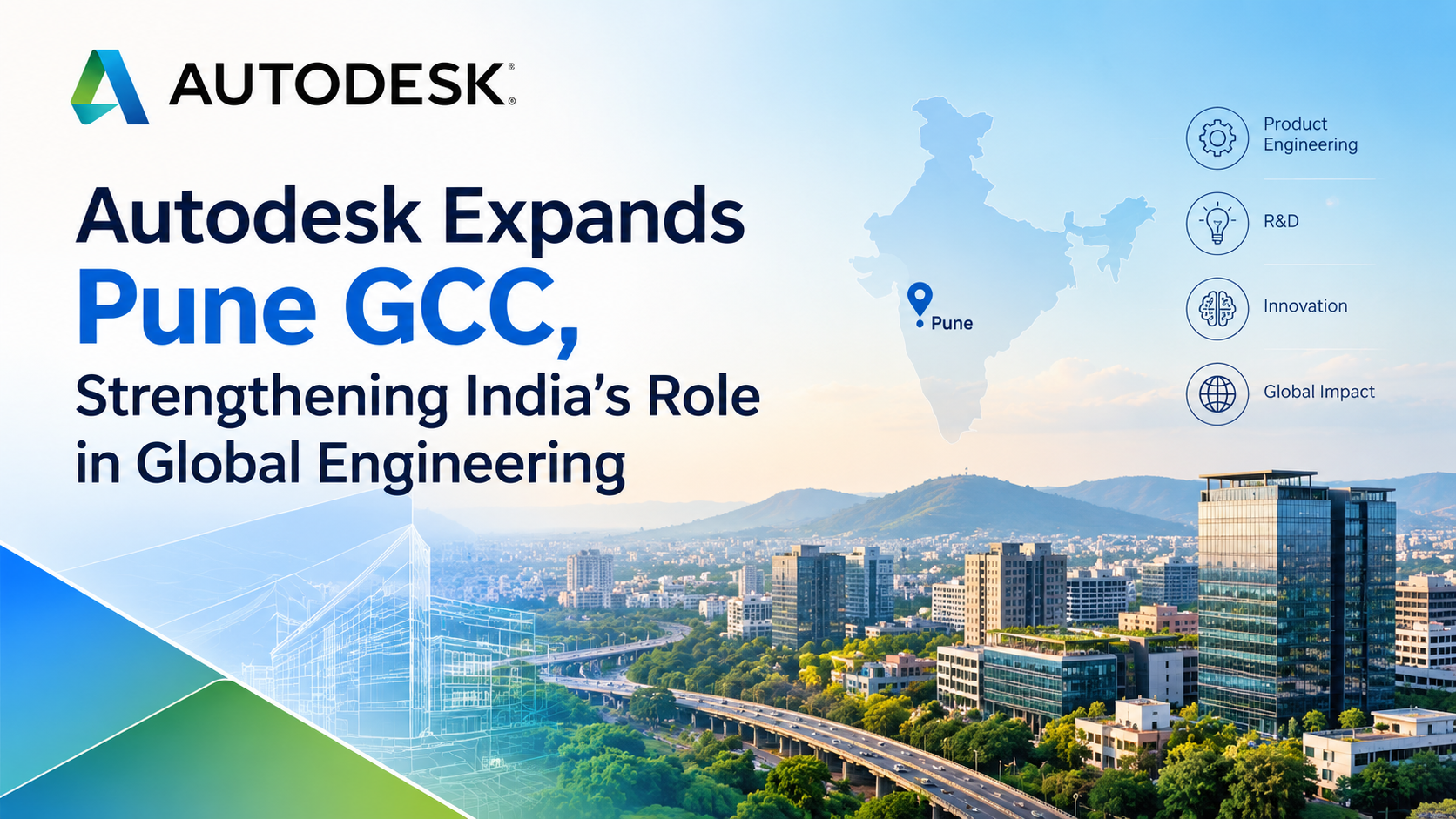
Pune is becoming an increasingly important destination for global engineering and technology centres, and Autodesk’s latest expansion adds another major name to the city’s growing GCC ecosystem.
Design and engineering software company Autodesk has inaugurated a new office in Pune, strengthening its engineering and technology presence in India.
The expansion represents more than an addition to Autodesk’s physical footprint. It reflects the company’s continued investment in India as a strategic location for engineering, product development and global technology capabilities.
From a Small Office to a Large Engineering Community
Autodesk’s India journey began nearly 19 years ago, when the company operated with a small office and a limited number of employees.
Since then, its India operations have evolved into a much broader technology and engineering organisation.
The new Pune facility marks another step in that evolution.
Pankaj Mishra, Site Leader and Director of Software Engineering at Autodesk, announced the office inauguration, describing the milestone as more significant than simply opening a new workspace.
According to Mishra, Autodesk’s Pune operation has developed into a large engineering and technology community driven by its people, ideas and collaboration.
Pune Gains Another Global Engineering Hub
Autodesk’s Pune expansion comes at a time when the city is strengthening its position as a preferred destination for Global Capability Centres.
The city has traditionally benefited from a strong engineering, automotive, manufacturing and technology talent base. Increasingly, global enterprises are using Pune not simply for support operations, but for engineering, R&D, product development and innovation.
Autodesk’s investment fits directly into this broader shift.
The company’s India teams contribute to product development across multiple industries, including:
- Architecture, Engineering and Construction (AEC)
- Manufacturing
- Media and Entertainment
- Product design and engineering
- Technology and software development
This positions Autodesk’s India organisation closer to the core of its global product ecosystem.
India Becomes Autodesk’s Second-Largest Employee Base
The scale of Autodesk’s India operations also highlights the strategic importance of the country.
According to Autodesk’s latest impact report, the company had 2,240 employees in India at the end of fiscal 2026, making India its second-largest employee base globally after the United States.
That workforce footprint indicates how significantly Autodesk’s India operations have evolved from a conventional offshore presence into a strategic technology and engineering capability.
Beyond Cost Arbitrage
The Autodesk story also reflects a broader transformation taking place across India’s GCC landscape.
Global companies are increasingly establishing and expanding centres in India to access specialised engineering talent, accelerate product development and build capabilities that directly support global businesses.
Autodesk’s India operations have already been associated with important areas of its product portfolio, including capabilities supporting AEC and manufacturing workflows. The company has also been expanding its focus on AI and next-generation technology.
Earlier this year, Autodesk executives highlighted India’s depth and quality of technology talent and its growing importance to the company’s global innovation strategy.
Why Autodesk’s Pune Expansion Matters
Autodesk’s new Pune office comes at an interesting moment for the city’s GCC ecosystem.
Pune is increasingly attracting companies looking to establish engineering-led and AI-oriented capability centres. Industry assessments identify engineering talent, mature GCC infrastructure and the city’s strong manufacturing and automotive ecosystem as major advantages.
The Maharashtra government is also targeting significant GCC growth, with a stated ambition to attract around 400 new GCCs and generate four lakh high-skilled jobs under its GCC policy.
Against this backdrop, Autodesk’s expansion adds further momentum to Pune’s emergence as an engineering and technology hub.
The Bigger GCC Trend
The significance of Autodesk’s Pune investment goes beyond one company or one office.
India’s GCC landscape is moving from a delivery-centre model toward a capability and innovation model.
The next generation of GCCs is increasingly expected to contribute to:
Product Engineering → R&D → AI & Data → Innovation → Global Product Ownership
Autodesk’s growing India footprint demonstrates this transition in action.
With more than two decades of evolution across its India operations and a workforce of over 2,000 employees, the company is increasingly leveraging India as a strategic technology base rather than simply an execution location.
GCC Lens
Autodesk’s Pune expansion is another signal that India’s GCC story is entering a more mature phase.
The question is no longer whether global companies will build technology capabilities in India.
The bigger question is how much of their global product, engineering and innovation agenda will increasingly be driven from India.
Autodesk’s expanding footprint suggests the answer could be: a lot more.
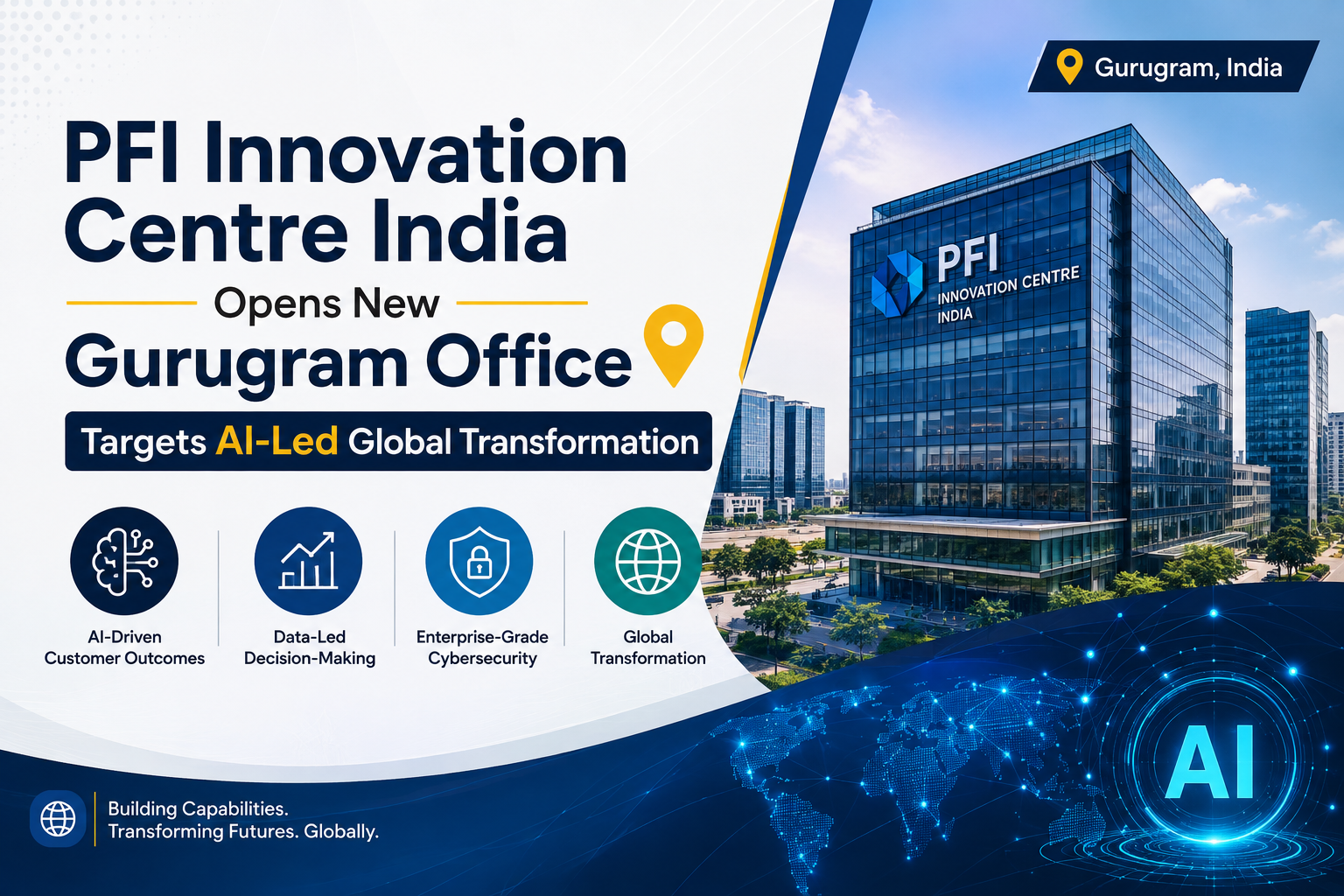
Gurugram, India: PFI Innovation Centre India, the global capability centre (GCC) of U.S.-based financial services major Prudential Financial, has opened a new office in Gurugram’s DLF Cyber City, strengthening the company’s India presence and expanding its focus on technology-led global transformation.
The new facility is being positioned as more than a conventional technology or support centre. PFI intends to make the India operation an integral part of its global operating model, with capabilities spanning artificial intelligence, data, enterprise cybersecurity, technology and enterprise transformation.
India Centre Positioned as a Global Capability Hub
The launch reflects the growing role of India in Prudential Financial’s global technology and business strategy. Rather than operating as a standalone support function, PFI Innovation Centre India is being built to contribute directly to the organisation’s global transformation agenda.
According to PFI, the Gurugram centre has been established to leverage India’s deep technology and talent ecosystem while accelerating enterprise transformation across its businesses.
PFI’s own India platform highlights four strategic capability areas: AI-driven customer outcomes, data-led decision-making, enterprise-grade cybersecurity and global transformation.
This positioning is significant as financial services organisations increasingly look to GCCs not only for cost-efficient delivery, but also for innovation, engineering expertise, data capabilities and enterprise-wide transformation.
AI and Data at the Core
Artificial intelligence is expected to be one of the key pillars of the new centre. PFI says the India operation is being developed to help improve customer outcomes and support enterprise transformation through AI and better use of data.
The focus extends beyond AI experimentation. The centre is expected to bring together technology, data, cybersecurity and transformation capabilities that can support Prudential Financial’s global businesses.
For the financial services sector, this convergence is increasingly important as insurers, asset managers and retirement businesses modernise legacy technology, strengthen risk management and use data and AI to improve decision-making and customer experiences.
Supporting a Global Financial Services Business
Prudential Financial operates across areas including life insurance, retirement, annuities and asset management. The company serves more than 50 million customers across more than 50 countries, giving the India centre a broad global business environment in which to operate.
The Gurugram centre therefore has the potential to play a significant role in supporting technology and transformation initiatives across multiple business lines.
PFI’s India platform describes its broader ambition as helping the organisation serve its global customer base better while accelerating transformation from the ground up.
Leadership to Drive the India Expansion
The centre is being led by Pravin Goel, who has joined PFI as Vice President and Country Head. Goel brings extensive experience in global financial services and technology, including a 14-year stint at BlackRock.
His appointment comes as PFI builds the leadership and organisational structure required to scale its India operations.
The company has also been strengthening its people strategy. PFI Innovation Centre India has highlighted culture, impact and excellence as key principles for building its India organisation, with an emphasis on ownership, flexibility, collaboration and professional growth.
Hiring Across Technology and Corporate Functions
The expansion is also creating opportunities across a broad range of technology and business functions.
Current hiring areas include software engineering, technology leadership, finance, audit, corporate legal and risk, indicating that PFI is developing a multi-functional GCC rather than limiting the centre to technology delivery.
PFI’s careers platform also positions the Gurugram centre as a high-performance environment where employees can take ownership, work on global problems and build careers within the wider Prudential Financial organisation.
This combination of technology and corporate capabilities could enable the India centre to gradually take on more end-to-end responsibilities across PFI’s global operations.
Why Gurugram Matters
The choice of Gurugram adds another dimension to PFI’s India strategy. DLF Cyber City provides access to a large pool of technology, financial services and corporate talent, alongside established connectivity and business infrastructure.
PFI describes its new workplace as being located in Gurugram’s Central Business District, with public transport connectivity, collaborative workspaces and facilities designed to support its growing workforce.
For a financial services company building an innovation-focused GCC, the location offers access to talent across technology, finance, risk, consulting and other specialised functions.
From GCC to Global Capability Engine
PFI Innovation Centre India’s launch reflects a broader evolution taking place across India’s GCC ecosystem.
Global companies are increasingly moving beyond traditional models centred on application maintenance, shared services and back-office operations. Newer GCCs are being designed around AI, data, cybersecurity, product engineering, digital transformation and strategic decision-making.
PFI’s approach fits directly into this trend.
By integrating technology, AI, data, cybersecurity and corporate functions into one India-based platform, the company is creating the foundation for a GCC that can participate more deeply in global business decisions and transformation programmes.
The Bigger GCC Takeaway
PFI Innovation Centre India’s Gurugram launch is therefore not simply an office expansion. It represents a strategic investment in India’s ability to contribute to a global financial services organisation.
With AI, data, cybersecurity and transformation at the centre of its mandate—and hiring already spanning technology and corporate functions—the Gurugram operation has the potential to evolve into a significant global capability hub for Prudential Financial.
As more financial services companies establish similar India-based centres, the competitive advantage will increasingly come not from scale alone, but from how effectively these GCCs can combine specialised talent, technology, innovation and global business ownership.
PFI’s new Gurugram centre appears designed with precisely that ambition in mind.
Hyderabad
Syneos Health Opens New Hyderabad Facility, Strengthening Its AI and Life Sciences GCC Strategy
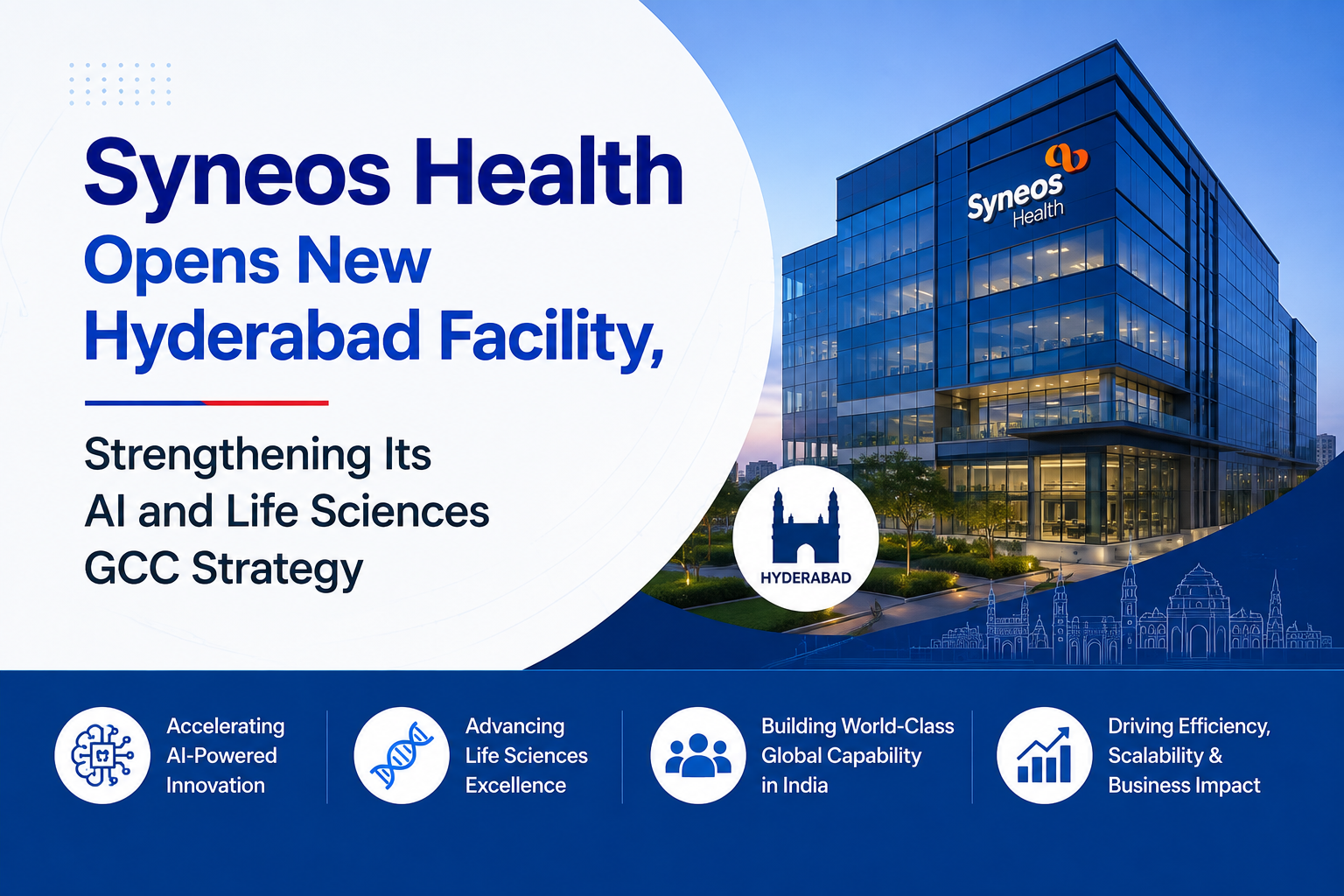
Hyderabad is strengthening its position as a strategic destination for global life sciences and healthcare technology operations, with Syneos Health opening a new facility at Phoenix Equinox in Gachibowli.
The new centre is significant not only because of its scale, but also because of its mandate. Syneos Health is positioning the Hyderabad facility as a strategic hub for artificial intelligence, data and technology, bringing together scientific expertise, biopharmaceutical knowledge and engineering capabilities to support the development, safety and commercialisation of therapies.
Hyderabad Facility Becomes a Major Global Hub
The new Hyderabad centre is described as Syneos Health’s largest facility in Asia and its third-largest globally. The expansion reinforces the company’s growing presence in a city that has developed a strong ecosystem spanning pharmaceuticals, biotechnology, clinical research, healthcare technology and advanced analytics.
Headquartered in Morrisville, North Carolina, Syneos Health has a global workforce of more than 26,000 people and provides services across the biopharmaceutical lifecycle, including clinical development, medical affairs and commercialisation.
The company’s existing Hyderabad presence has been based at Raheja Mindspace in HITEC City. The new Gachibowli facility adds another strategic dimension to its operations in India.
From Traditional GCC to AI-Powered Healthcare Innovation
The most important aspect of the expansion is the role being assigned to the Hyderabad hub.
Rather than operating primarily as a conventional shared-services centre, Syneos Health is building the location around AI, data and technology excellence. The objective is to combine technology capabilities with domain expertise in clinical development, patient safety and commercialisation.
This reflects a broader transformation taking place across India’s GCC ecosystem. Global organisations are increasingly establishing specialised teams in areas such as:
- Generative AI
- Data engineering
- Advanced analytics
- Machine learning
- Clinical technology
- AI product development
- Responsible AI and compliance
- Digital transformation
The shift signals a move away from the traditional cost-arbitrage model toward high-value, knowledge-intensive GCC operations.
AI at the Centre of the Hyderabad Strategy
Syneos Health’s Hyderabad AI Hub is designed to support the application of AI across clinical development, safety and commercialisation.
The company describes the hub as a place where AI capabilities work alongside clinicians, safety scientists and commercial specialists. Its stated focus includes building technology that can address real-world healthcare and biopharmaceutical challenges rather than treating AI as an isolated experimentation function.
The organisation is also building capabilities across the AI and data lifecycle, including GenAI engineering, prompt specialisation, MLOps, data engineering, data science, AI product management, responsible AI, quality engineering and enterprise architecture.
This combination of domain expertise + technology + AI could become one of the defining characteristics of the new Hyderabad operation.
Creating a New Talent Model for Life Sciences
The expansion also highlights the changing talent requirements within healthcare-focused GCCs.
Syneos Health’s current Hyderabad hiring pipeline includes roles across safety and pharmacovigilance, data, technology, quality, cybersecurity, clinical programming and transformation. Its careers portal currently lists multiple Hyderabad opportunities, including Safety & PV Specialists, Validation & QA Analysts, QA Testers, Senior Transformation Analysts and Cyber Resiliency professionals.
The company’s broader Hyderabad AI strategy is expected to require professionals who can operate at the intersection of technology and life sciences.
This creates demand for a new category of talent: professionals who understand not only AI and data engineering, but also the regulatory, scientific and operational requirements of healthcare.
Why This Matters for Hyderabad’s GCC Ecosystem
Syneos Health’s investment adds another important dimension to Hyderabad’s GCC story.
The city has traditionally been recognised for its IT and pharmaceutical strengths. Increasingly, however, these two ecosystems are converging.
Healthcare companies can now tap into:
Pharmaceutical expertise + clinical research + engineering talent + AI capabilities + advanced analytics
That combination makes Hyderabad increasingly attractive for global organisations looking to build specialised healthcare technology and innovation centres.
Syneos Health’s new facility is therefore more than an office expansion. It represents the emergence of life sciences GCCs as technology and innovation engines.
The Bigger GCC Trend
The Syneos Health expansion reflects a broader change in how multinational companies are approaching their India operations.
Earlier generations of GCCs were often established around finance, IT support, customer operations and other shared services. Today’s centres are increasingly being designed around product engineering, AI, analytics, R&D, digital transformation and strategic decision support.
The healthcare sector is particularly suited to this evolution because AI and advanced analytics can be applied across complex workflows—from clinical development and safety monitoring to commercial strategy.
For companies such as Syneos Health, India offers access to both the technology talent required to build these capabilities and the scientific expertise needed to apply them responsibly.
A Strategic Milestone for Syneos Health and Hyderabad
The opening of Syneos Health’s new Hyderabad facility comes at a time when the company is accelerating its AI strategy globally. Syneos Health recently highlighted efforts to advance AI-powered clinical capabilities and improve decision-making across its biopharmaceutical services.
Against this backdrop, Hyderabad’s role becomes increasingly strategic.
The new centre demonstrates how a GCC can evolve from a delivery location into a global capability and innovation hub, with responsibility for technology, data, AI and domain-specific transformation.
For Hyderabad, it strengthens the city’s position as one of India’s leading destinations for life sciences-driven GCC growth.
For Syneos Health, it provides a platform to bring together AI, engineering and biopharmaceutical expertise to accelerate the journey from scientific discovery to patient impact.
GCC Lens Take
Syneos Health’s Hyderabad expansion is a strong example of the next generation of GCCs—where the objective is no longer simply to deliver services from India, but to build specialised capabilities that directly influence global business outcomes.
The combination of AI, data, engineering and life sciences expertise could make the Hyderabad hub an important part of Syneos Health’s global innovation strategy.
As more healthcare and pharmaceutical companies follow a similar path, Hyderabad’s GCC ecosystem could increasingly evolve into a global centre for AI-powered healthcare innovation.
-
 Business6 months ago
S&P Global Expands India Footprint with New Gurugram Hub
-

 Bengaluru7 months ago
Abercrombie & Fitch Enters India’s GCC Landscape with Bengaluru Launch
-
 Politics7 months ago
Maximus Expands Hyderabad GCC: Strengthening India’s Role in Global Healthcare & Public Sector Operations
-

 Press Release6 months ago
KnowVisory Global Launches Payroll Processing and Administration Services to Simplify Compliance for Growing Businesses
-

 Bengaluru5 months ago
Commonwealth Bank Appoints Shubha Iyer as CEO of CommBank India to Strengthen GCC and Digital Transformation Strategy
-
 New GCC4 months ago
Generac Launches First India Global Capability Center in Pune
-
 Bengaluru3 months ago
DePuy Synthes Selects Bengaluru for New GCC, Targets 500 Hires
-

 Business7 months ago
GCC in Coimbatore: Why It’s the Next Big Hub for Global Capability Centers