
Bengaluru
Fidelity’s Bengaluru Expansion Signals the Next Phase of GCC Evolution in India

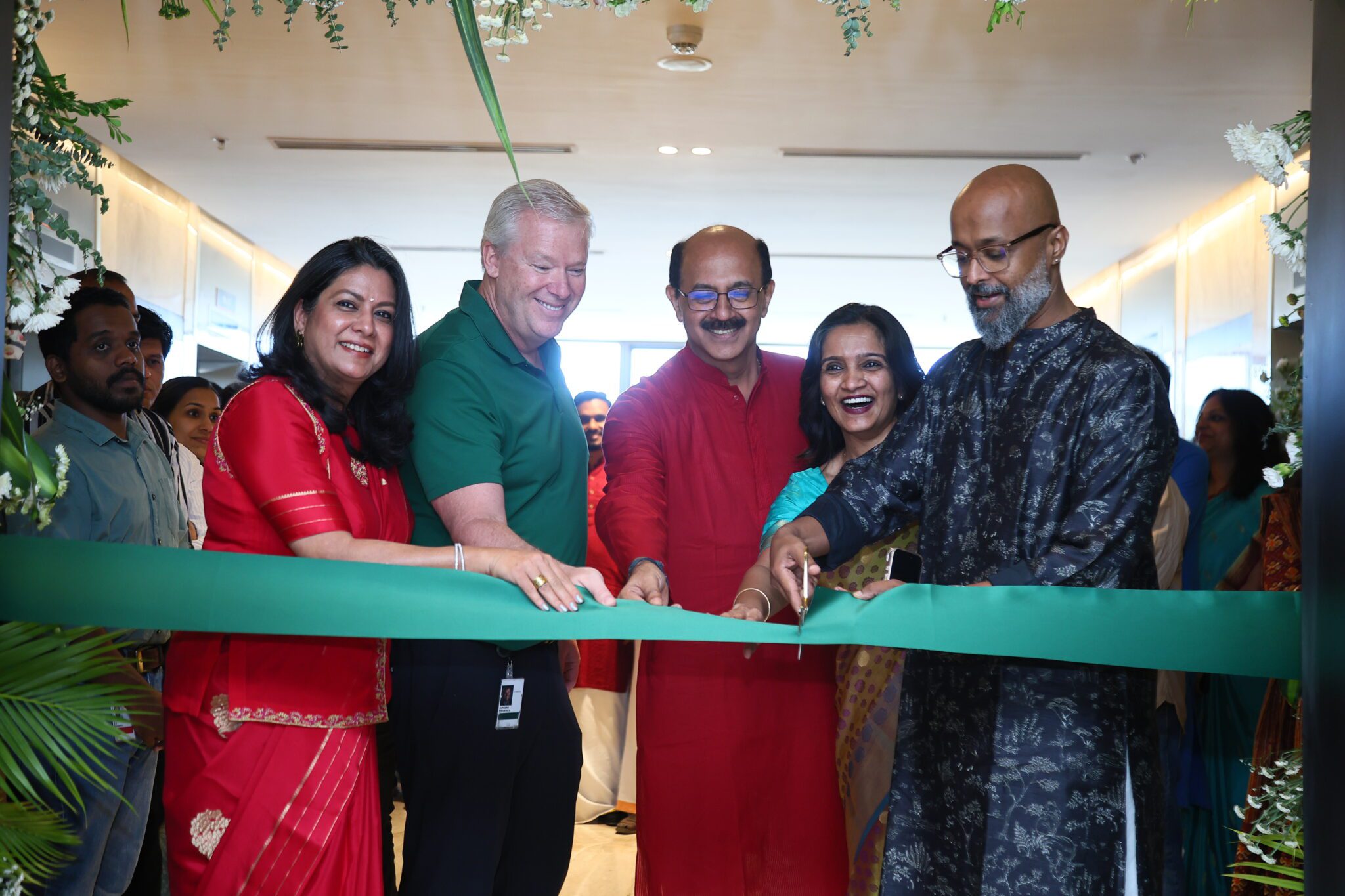
India’s Global Capability Center (GCC) ecosystem continues to accelerate, and the recent expansion by Fidelity Investments India in Bengaluru is a strong indicator of where the industry is headed next. More than just a real estate move, this development reflects a deeper transformation in how global enterprises are leveraging India—not just for cost efficiency, but for innovation, talent, and long-term strategic growth.
A Strategic Expansion, Not Just a New Office
Fidelity’s new office in Bengaluru is not simply about adding more workspace—it represents a deliberate investment in scaling high-value capabilities. As organizations increasingly shift toward digital-first operations, GCCs are evolving into integrated hubs that drive business outcomes rather than support them.
The expansion underscores Fidelity’s commitment to strengthening its India operations, enabling teams to work in more agile, collaborative, and technology-enabled environments. This aligns with a broader industry trend where GCCs are being reimagined as centers of excellence across domains like data analytics, cybersecurity, AI, and product engineering.
Bengaluru Reinforces Its GCC Leadership
Bengaluru continues to dominate as India’s GCC capital, attracting global enterprises across financial services, technology, healthcare, and more. Fidelity’s expansion further cements the city’s reputation as a preferred destination for organizations seeking deep talent pools and a mature ecosystem.
Several factors continue to drive Bengaluru’s appeal:
- Access to highly skilled tech and financial talent
- Strong startup and innovation ecosystem
- Mature infrastructure for global operations
- Proximity to leading research and academic institutions
As companies like Fidelity scale their presence, the city’s role is evolving from a delivery hub to a strategic innovation powerhouse.
The Shift Toward Experience-Driven Workspaces
One of the defining aspects of modern GCC expansion is the emphasis on workplace experience. Fidelity’s new office reflects this shift—designed to foster collaboration, flexibility, and employee well-being.
Today’s GCCs are investing in:
- Hybrid work enablement
- Smart office technologies
- Collaborative zones and innovation labs
- Employee-centric design and amenities
This evolution is critical in attracting and retaining top talent, especially in competitive markets like Bengaluru.
Talent Strategy at the Core
At the heart of this expansion lies a clear focus on talent. Fidelity is not just expanding physical capacity—it is building a future-ready workforce capable of driving global business priorities.
India’s GCCs are increasingly hiring for:
- Advanced analytics and data science roles
- Cloud and platform engineering
- Cybersecurity and risk management
- Digital product development
This reflects a fundamental shift—from transactional roles to strategic, high-impact functions.
What This Means for the GCC Ecosystem
Fidelity’s move is part of a larger pattern reshaping the GCC landscape in India:
- From Cost Arbitrage to Value Creation
GCCs are no longer measured by cost savings alone—they are now critical to innovation and revenue growth. - Expansion Beyond Scale to Capability Depth
Companies are focusing on building specialized capabilities rather than just increasing headcount. - India as a Long-Term Strategic Base
Global firms are doubling down on India as a core part of their global operating model. - Workplace Transformation as a Differentiator
The quality of workspace and employee experience is becoming a competitive advantage.
The Bigger Picture
Fidelity’s new office is more than an isolated announcement—it’s a reflection of a maturing GCC ecosystem that is entering its next phase. As global organizations continue to invest in India, the focus is clearly shifting toward innovation, talent, and long-term value creation.
For stakeholders across the ecosystem—enterprises, policymakers, and service providers—this signals an opportunity to rethink how GCCs are built and scaled in the coming decade.
Final Take
The expansion of Fidelity Investments India in Bengaluru is a strong validation of India’s growing importance in global business strategy. As GCCs continue to evolve, the winners will be those who invest not just in infrastructure, but in innovation, talent, and experience.
For GCC Lens, this marks yet another milestone in tracking how India is redefining the global capability center model—from support functions to strategic engines of growth.
Data Source : link
Bengaluru
Arrive Launches Bengaluru Innovation Hub to Drive AI, Engineering and Global Mobility Innovation
Bengaluru, India: Global mobility technology company Arrive has strengthened its India technology presence with the launch of a new 20,000 sq. ft. innovation hub in Bengaluru, positioning the city as a strategic centre for engineering, product development, artificial intelligence and global mobility solutions.
The new facility brings together teams spanning engineering, product, customer care, sales operations and AI, reflecting Arrive’s ambition to build a technology-led global capability in India rather than a conventional back-office operation.
Bengaluru Emerges as a Strategic Technology Hub
Arrive evaluated multiple Indian cities before selecting Bengaluru, with the availability of specialised technology talent and a strong ecosystem of partners emerging as key factors in the decision.
The company expects the Bengaluru centre to scale to a few hundred employees by early 2027, with engineering expected to account for the majority of the workforce. This expansion underlines the growing importance of Bengaluru as a location for global companies seeking advanced engineering and digital capabilities.
For Arrive, however, the centre is designed to do more than provide access to India’s talent pool. It is expected to play a direct role in developing and improving the company’s global products and technology platforms.
An AI-First Innovation Centre
One of the defining characteristics of the new Bengaluru hub is its AI-first approach.
Arrive CEO Cameron Clayton said the company expects employees to adopt AI immediately as part of their everyday work. The focus is not simply on experimenting with AI but on embedding it into engineering, product development and mobility solutions.
This approach aligns with Arrive’s broader objective of using technology and data to make cities more efficient and liveable.
The company operates mobility brands including EasyPark, Flowbird, RingGo, ParkMobile and Parkopedia, with a presence spanning more than 20,000 cities across 90 countries. Its technology portfolio covers areas such as smart payments, parking optimisation, traffic management, public transportation and autonomous vehicle solutions.
From GCC to Global Innovation Engine
Perhaps the most significant aspect of Arrive’s Bengaluru strategy is its departure from the traditional GCC model.
The company does not view the centre as a conventional offshore or back-office operation. Instead, Arrive wants the Bengaluru team to challenge existing processes, develop new solutions and help reshape how the company operates globally.
This represents a broader shift in the GCC landscape, where India-based centres are increasingly becoming innovation engines rather than execution centres.
Arrive’s approach is centred around a simple question: how can the organisation disrupt and improve what it already does?
That mindset places the Bengaluru hub closer to a global product and engineering centre than a traditional shared-services facility.
Bengaluru Team to Work on Autonomous Mobility
The new hub will also contribute to Arrive’s autonomous vehicle initiatives in the United States.
Teams in Bengaluru are expected to work on autonomous mobility solutions being deployed in cities including San Francisco, Phoenix, Austin and Atlanta, while supporting future deployments in other markets.
This gives the Indian centre a direct role in solving mobility challenges across international markets and demonstrates the increasing global responsibility being assigned to Indian engineering teams.
Turning Mobility Data Into Better Decisions
Data will be another major pillar of the Bengaluru hub.
Arrive intends to use the vast amount of mobility data generated across the cities it serves to identify patterns, generate recommendations and support better decision-making.
The company’s broader objective is to create a continuous feedback loop where user experiences generate insights, those insights inform technology and product improvements, and the resulting improvements enhance the mobility experience.
This data-driven model could become particularly important as cities increasingly rely on digital platforms to manage parking, transportation, traffic and payments.
Measuring Technology Impact Through Time Saved
Arrive’s technology strategy is closely connected to its stated purpose of making cities more liveable.
In 2025, the company’s platforms processed approximately two billion mobility payment transactions. Arrive estimated that each transaction saved users around three minutes on average, translating into approximately 6,300 years of time returned to the cities it serves.
The company sees AI and the Bengaluru engineering team as an opportunity to increase that impact significantly, with an ambition to grow the amount of time saved to 10,000 years, 15,000 years and beyond.
Talent Strategy Goes Beyond Hiring
As Arrive scales the Bengaluru hub, talent development will be another important component of its strategy.
The company says it is investing in training and education, with an emphasis on making employees more employable during their time with the organisation.
Rather than simply recruiting people to execute predefined tasks, Arrive is looking for professionals who want to build, architect and shape the company’s future.
This reflects the changing expectations of GCC talent. Engineers and technology professionals increasingly want exposure to global products, ownership of meaningful projects and opportunities to influence business outcomes.
India Could Become a Future Market
The Bengaluru centre could eventually play a role beyond technology development.
Arrive has identified India, Africa and South America as three important growth geographies for the company. While the immediate focus of the Bengaluru hub is global technology and engineering, the company also sees India as a potential future market.
Arrive’s leadership has indicated that India “has to be a market” for the company in the future, suggesting that the India strategy could eventually span technology development, operations and market expansion.
What Arrive’s Bengaluru Hub Means for India’s GCC Ecosystem
Arrive’s investment is another example of how the Indian GCC landscape is evolving.
The first generation of global capability centres in India was largely associated with cost optimisation, shared services and back-office execution. Today’s centres are increasingly being designed around AI, engineering, product innovation, data science and global decision-making.
Arrive’s Bengaluru hub captures this transition particularly well.
With engineering at its core, an AI-first operating model, exposure to global autonomous mobility projects and responsibility for continuous product innovation, the centre is being built to contribute directly to Arrive’s global growth agenda.
For Bengaluru, the development further reinforces its position as one of the world’s leading destinations for advanced technology and engineering talent.
For India’s wider GCC ecosystem, Arrive’s model sends an important signal: the next generation of GCCs will not simply support global businesses—they will increasingly help build them.
Source: link
Bengaluru
Rockwell Automation Consolidates Bengaluru GCC Campus to Strengthen Global Manufacturing Innovation
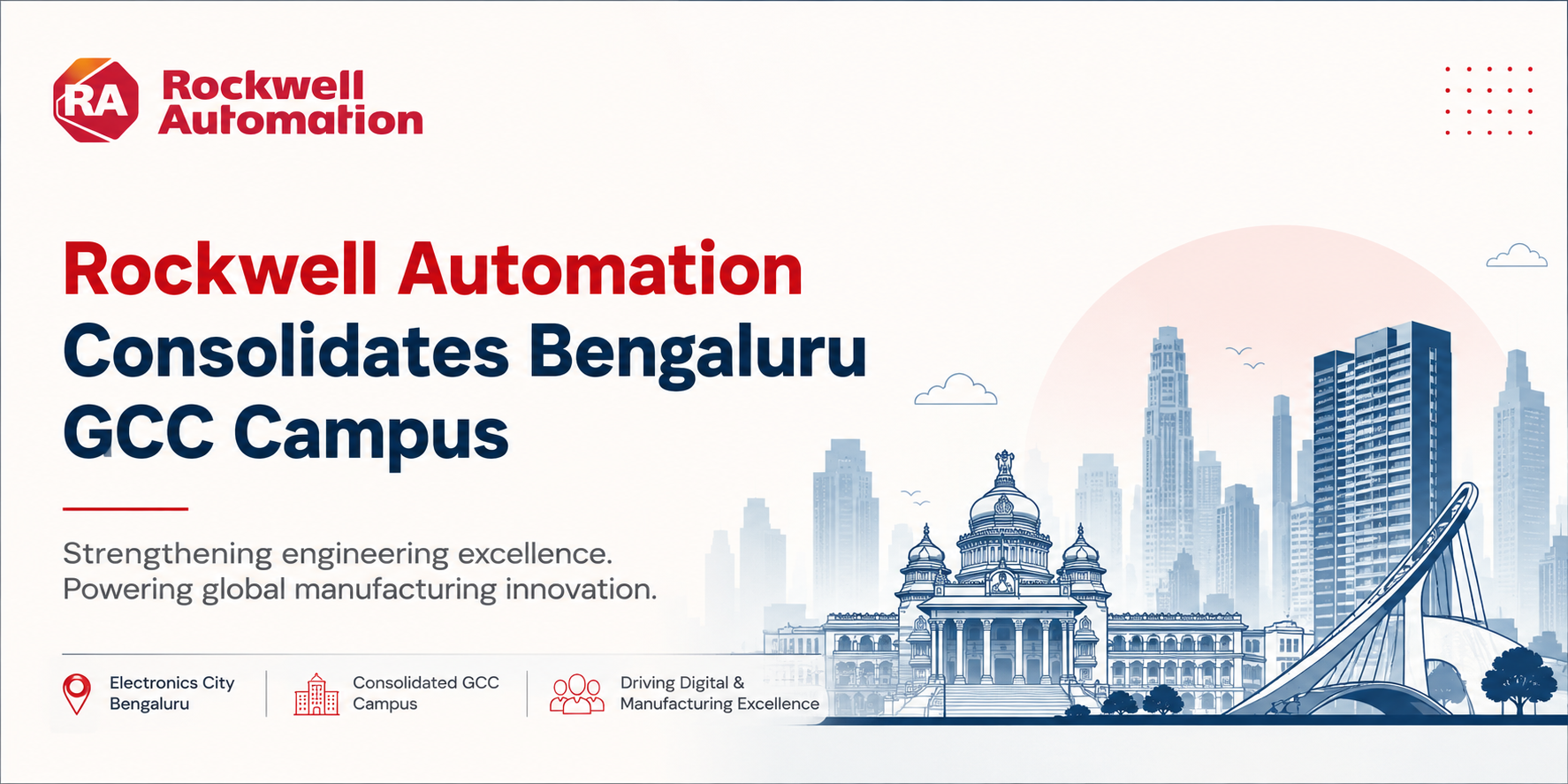
India’s Global Capability Center (GCC) landscape continues to expand beyond traditional IT and business support functions, with global industrial technology leaders increasingly leveraging the country for advanced engineering, automation, and digital manufacturing capabilities. The latest example comes from Rockwell Automation, which has inaugurated a consolidated Global Capability Centre campus in Bengaluru, further strengthening India’s role in the future of industrial innovation.
Rockwell Automation Brings Key Capability Teams Together
Rockwell Automation, a global leader in industrial automation and digital transformation solutions, has officially launched its consolidated GCC campus in Electronics City, Bengaluru. The new facility brings together the company’s Digital and Manufacturing Operations Management (MOM) teams under a single campus, creating a more integrated environment for collaboration, innovation, and product development.
The inauguration was led by Blake Moret, Chairman and Chief Executive Officer of Rockwell Automation, underscoring the strategic importance of India within the company’s global operations and long-term growth plans.
The move reflects Rockwell Automation’s commitment to leveraging India’s deep engineering talent pool while accelerating innovation across manufacturing technologies, industrial software, and digital transformation initiatives.
A Strategic Expansion in India’s Manufacturing Technology Ecosystem
The decision to consolidate multiple capability teams into a unified campus represents more than a real estate expansion. It signals a broader strategic shift toward creating integrated centers of excellence that can drive innovation across multiple business functions.
By bringing digital engineering and manufacturing operations experts together, Rockwell Automation aims to foster closer collaboration between teams responsible for developing technologies that power smart factories, industrial automation systems, and intelligent manufacturing operations worldwide.
As manufacturers globally continue investing in Industry 4.0 technologies, artificial intelligence, industrial IoT, and connected operations, the need for cross-functional engineering capabilities has become increasingly critical. The Bengaluru campus is expected to play an important role in supporting these global transformation initiatives.
Why This Development Matters for the GCC Industry
Strengthening Cross-Functional Collaboration
Modern manufacturing innovation requires seamless integration between software, automation systems, operational technology, and data-driven decision-making. Consolidating Digital and Manufacturing Operations Management teams under one roof can significantly improve collaboration, accelerate product development cycles, and enhance innovation outcomes.
Reinforcing Bengaluru’s Leadership Position
Bengaluru has long been recognized as India’s technology capital, but it is increasingly emerging as a global hub for industrial engineering and manufacturing technology capabilities. Rockwell Automation’s investment further strengthens the city’s position as a preferred destination for advanced engineering, automation, and digital manufacturing GCCs.
The presence of a mature talent ecosystem, strong academic institutions, startup innovation, and a thriving technology community continues to attract multinational organizations seeking specialized engineering capabilities.
Highlighting India’s Growing Role in Global Manufacturing Transformation
Global manufacturing companies are no longer viewing India solely as a destination for cost optimization. Instead, they are increasingly positioning their India centers as strategic hubs for innovation, engineering excellence, and digital transformation.
Rockwell Automation’s expanded presence demonstrates how Indian teams are contributing directly to the development of next-generation manufacturing solutions that support customers and operations worldwide.
Building on Long-Term Investment Commitments
The project also builds upon Rockwell Automation’s broader investment journey in India. Continued support from ecosystem stakeholders, including Invest India, has helped facilitate expansion initiatives that contribute to the country’s growing GCC and manufacturing technology ecosystem.
The Rise of Industrial GCCs in India
The GCC model itself is undergoing significant transformation. While technology development, finance, HR, and shared services remain core functions, a growing number of global organizations are establishing specialized centers focused on engineering, product innovation, industrial automation, and manufacturing technologies.
Industrial companies are increasingly using their India operations to support:
- Digital engineering and product development
- Manufacturing technology innovation
- Industrial software development
- Automation and control systems engineering
- Data analytics and intelligent operations
- Smart factory initiatives
- Industrial IoT and connected manufacturing solutions
- Global research and development programs
This shift is creating a new generation of GCCs that are deeply embedded in core business functions and strategic growth initiatives.
What This Means for the Future of GCCs
Rockwell Automation’s consolidated Bengaluru campus highlights a broader trend shaping the future of Global Capability Centers. The next wave of GCC growth is increasingly centered on innovation, engineering excellence, and business transformation rather than traditional support services.
As global manufacturers accelerate digital transformation efforts, India is emerging as a critical destination for developing technologies that power the factories, supply chains, and industrial ecosystems of the future.
The establishment of integrated engineering and manufacturing-focused campuses demonstrates the growing confidence multinational companies have in India’s ability to deliver high-value innovation at a global scale.
Conclusion
Rockwell Automation’s new consolidated GCC campus in Bengaluru represents another milestone in India’s evolving GCC journey. By bringing together digital and manufacturing operations capabilities, the company is creating a stronger foundation for innovation while reinforcing India’s position as a strategic hub for industrial technology and advanced manufacturing.
As the GCC landscape continues to mature, investments such as these highlight how India is becoming an indispensable partner in global manufacturing transformation, helping organizations build smarter, more connected, and more intelligent industrial operations for the future.

DePuy Synthes, the orthopaedics company of Johnson & Johnson MedTech, is strengthening its presence in India with the establishment of a new Global Capability Center (GCC) in Bengaluru. The company plans to hire approximately 500 professionals over the next two years, underscoring its commitment to leveraging India’s talent ecosystem to support global innovation, technology, and business operations.
The new center will serve as a strategic hub for advancing digital capabilities, driving operational excellence, and supporting DePuy Synthes’ mission of transforming patient care through innovation in orthopaedics and medical technology.
Bengaluru Chosen as Strategic Innovation Hub
Bengaluru continues to attract multinational organizations seeking to build high-value GCCs focused on technology, engineering, analytics, and innovation. With its deep talent pool, mature startup ecosystem, and strong healthcare technology capabilities, the city has emerged as a preferred destination for global healthcare and life sciences companies.
DePuy Synthes’ decision to establish its GCC in Bengaluru reflects the growing importance of India in the company’s global operating model. The center is expected to play a critical role in supporting worldwide business functions while accelerating digital transformation initiatives across the organization.
Creating 500 High-Skilled Jobs
As part of its expansion strategy, DePuy Synthes plans to recruit around 500 professionals across various functions over the next two years. The hiring initiative will focus on attracting talent in areas such as:
- Digital Technology
- Data Analytics
- Software Engineering
- Artificial Intelligence and Automation
- Cybersecurity
- Finance and Business Operations
- Supply Chain and Procurement
- Healthcare Technology Innovation
The planned workforce expansion highlights the increasing role of GCCs as centers of expertise rather than traditional support operations.
Supporting Global Operations and Innovation
The Bengaluru GCC will be designed to support DePuy Synthes’ global business objectives through technology-driven innovation and process excellence. The center is expected to collaborate closely with teams across international markets, helping streamline operations, enhance customer experiences, and accelerate product and technology development.
As healthcare organizations increasingly adopt digital technologies, GCCs are becoming critical enablers of innovation. The new Bengaluru center will contribute to initiatives involving advanced analytics, automation, digital health solutions, and enterprise transformation programs.
India Strengthens Its Position in Healthcare GCC Growth
India has become a leading destination for healthcare and life sciences GCCs, attracting investments from pharmaceutical companies, medical device manufacturers, and healthcare technology firms. Organizations are increasingly establishing centers in the country to access specialized talent, accelerate innovation, and improve operational efficiency.
The launch of DePuy Synthes’ Bengaluru GCC adds to the growing momentum within India’s healthcare GCC ecosystem, which continues to expand across areas such as research, product engineering, regulatory operations, data science, and digital health.
GCCs Evolving into Strategic Business Enablers
The latest investment reflects a broader trend in which multinational organizations are transforming GCCs into innovation-led business hubs. Rather than focusing solely on cost optimization, modern GCCs are driving enterprise-wide transformation through technology adoption, advanced analytics, and global collaboration.
For healthcare organizations in particular, GCCs are increasingly supporting mission-critical functions that directly impact innovation, patient outcomes, and business performance.
Looking Ahead
The establishment of DePuy Synthes’ Bengaluru Global Capability Center marks a significant milestone in the company’s India growth strategy. With plans to hire 500 professionals and build advanced technology and business capabilities, the new center is expected to play a vital role in supporting global operations and future innovation initiatives.
As India continues to attract high-value GCC investments from global healthcare leaders, DePuy Synthes’ expansion further reinforces Bengaluru’s position as a premier destination for innovation, digital transformation, and global business services.
Data Source : Link
-

 Business6 months ago
S&P Global Expands India Footprint with New Gurugram Hub
-

 Bengaluru7 months ago
Abercrombie & Fitch Enters India’s GCC Landscape with Bengaluru Launch
-
 Politics7 months ago
Maximus Expands Hyderabad GCC: Strengthening India’s Role in Global Healthcare & Public Sector Operations
-

 Press Release6 months ago
KnowVisory Global Launches Payroll Processing and Administration Services to Simplify Compliance for Growing Businesses
-

 Bengaluru5 months ago
Commonwealth Bank Appoints Shubha Iyer as CEO of CommBank India to Strengthen GCC and Digital Transformation Strategy
-
 New GCC4 months ago
Generac Launches First India Global Capability Center in Pune
-

 Bengaluru3 months ago
DePuy Synthes Selects Bengaluru for New GCC, Targets 500 Hires
-

 Business7 months ago
GCC in Coimbatore: Why It’s the Next Big Hub for Global Capability Centers