
Leadership
Vena Solutions Appoints Rama Jayanti as India Country Head, Strengthens Pune and Indore Technology Hubs

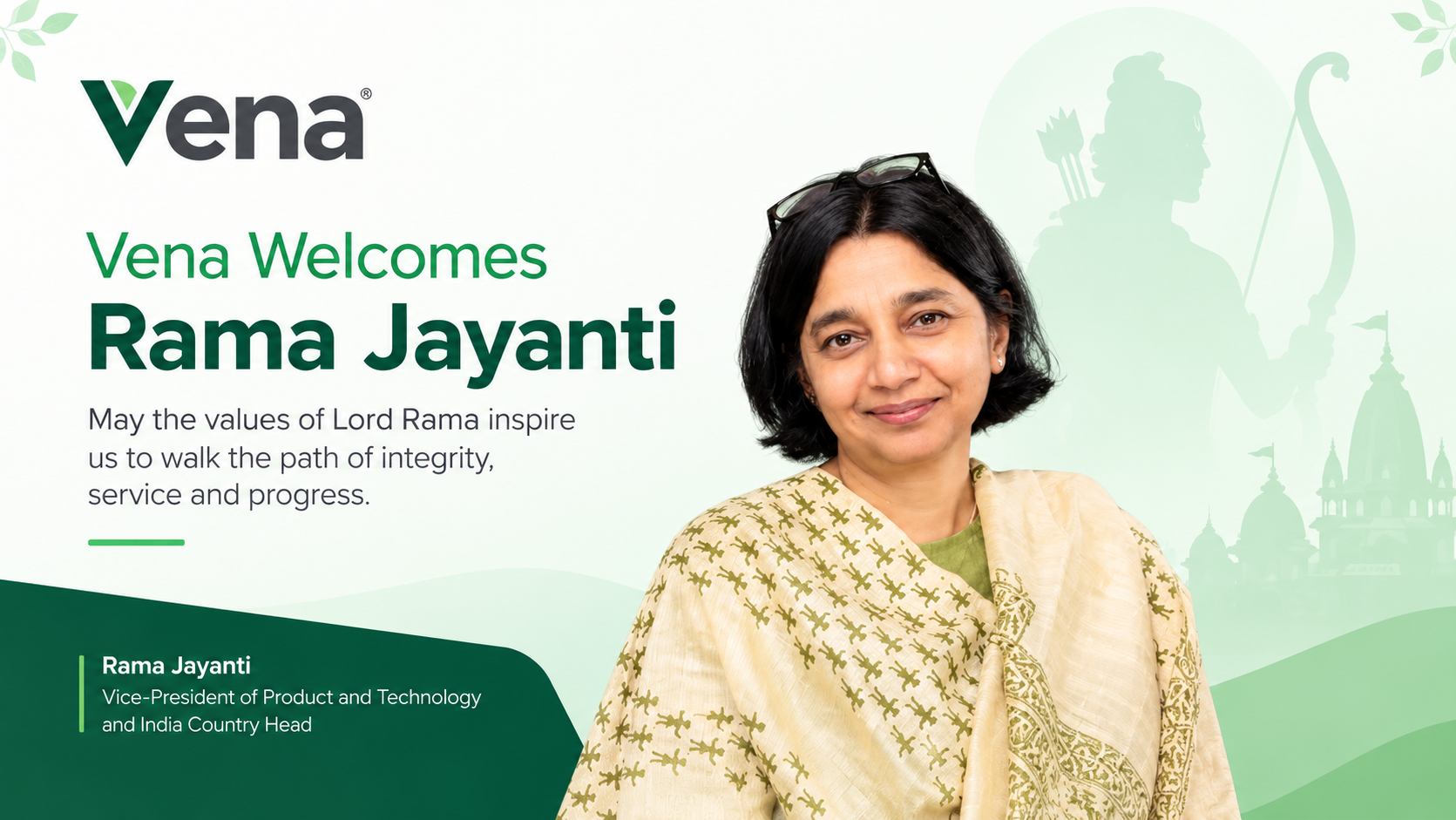
The appointment comes as global technology companies increasingly expand their India operations beyond traditional service delivery, positioning their teams as strategic contributors to product innovation and business growth.
According to The Economic Times GCC, Jayanti will lead Vena Solutions’ product, technology and operations functions in India, with a focus on strengthening the company’s presence across its Pune and Indore offices.
Rama Jayanti Brings More Than 29 Years of Technology Leadership Experience
Jayanti brings over 29 years of experience in establishing technology centres in India and scaling them into product-focused organisations.
Her background aligns with the evolving role of Global Capability Centres (GCCs), where leadership teams are increasingly expected to build capabilities that support global product development, engineering and technology strategy.
She holds a Master of Science degree from the Indian Institute of Technology Bombay and a PhD from the University of Pittsburgh.
In her new role, Jayanti will oversee the company’s product, technology and operations functions in India, while developing its local offices into strategic hubs that contribute to Vena’s global growth and technology capabilities.
Pune and Indore Positioned as Strategic Hubs
A key priority under Jayanti’s leadership will be strengthening Vena Solutions’ India operations, with its Pune and Indore offices positioned to support the company’s global business.
The focus on these locations reflects the broader evolution of India’s GCC ecosystem. Global organisations are increasingly building specialised teams in Indian cities to support product engineering, technology development and business-critical functions.
Pune offers an established technology and engineering ecosystem, while Indore provides access to a growing talent base. Together, the two locations can support the development of capabilities aligned with Vena’s global priorities.
For Vena Solutions, the objective is to build India operations that contribute meaningfully to the company’s technology capabilities and long-term growth.
What Does Vena Solutions Do?
Vena Solutions specialises in financial planning and analysis (FP&A) software. Its platform helps organisations manage budgeting, forecasting, financial reporting and business planning.
The technology enables finance teams to consolidate data, improve planning processes and support business decision-making.
As organisations face growing demands for faster financial insights and more integrated planning, technology platforms in the FP&A space play an important role in connecting financial data with operational and strategic decisions.
Vena’s India technology organisation is therefore positioned within a business that combines enterprise software development with finance and planning workflows.
India’s GCCs Are Moving Towards Product Ownership
Jayanti’s appointment reflects a wider shift in the role of India’s Global Capability Centres.
Historically, many multinational companies established Indian operations to access skilled talent and improve operational efficiency. Over time, these centres have expanded into technology development, product engineering, analytics and innovation.
The next stage of this evolution places greater emphasis on leadership, product ownership and the ability to contribute directly to global business outcomes.
For companies such as Vena Solutions, building product-focused technology teams in India can help strengthen the connection between local capabilities and global product priorities.
Leadership appointments also matter in this transition. Experienced leaders who have built and scaled technology organisations can help establish the structures, talent strategies and operating models needed to support sustainable growth.
Why This Appointment Matters for India’s GCC Ecosystem
Vena Solutions’ leadership move highlights three important developments in India’s GCC landscape.
1. Greater emphasis on product-led operations
India teams are increasingly expected to contribute to product development and technology capabilities rather than focus exclusively on execution and support.
2. Growing importance of experienced GCC leadership
Building a strategic technology centre requires more than hiring talent. It also requires leaders who can establish capabilities, align teams with global priorities and scale operations effectively.
3. Expansion beyond traditional technology hubs
Developing operations across Pune and Indore illustrates how companies can build technology capabilities across multiple Indian locations, drawing on different talent pools and regional ecosystems.
These developments reinforce the importance of treating India operations as an integral part of global business strategy.
GCC Lens: The Bigger Picture
Vena Solutions’ appointment of Rama Jayanti is more than a leadership change. It signals the importance of building India operations around product development, technology leadership and global business contribution.
With Pune and Indore positioned as strategic hubs, the company’s India organisation has an opportunity to deepen its role in supporting global technology capabilities.
As India’s GCC ecosystem matures, the differentiator will increasingly be the value these centres create—not simply the size of their workforce or the efficiency of their operations.
The next generation of GCCs will be defined by product ownership, strong local leadership and measurable contributions to global growth.
Vena Solutions’ India leadership strategy fits into this broader transformation.
Source: The Economic Times GCC, “Vena Solutions appoints Rama Jayanti as India country head,” published October 12, 2026.
Leadership
Orbia Appoints Bijal Shah to Lead Pune GCC, Focuses on Innovation and Global Business Impact
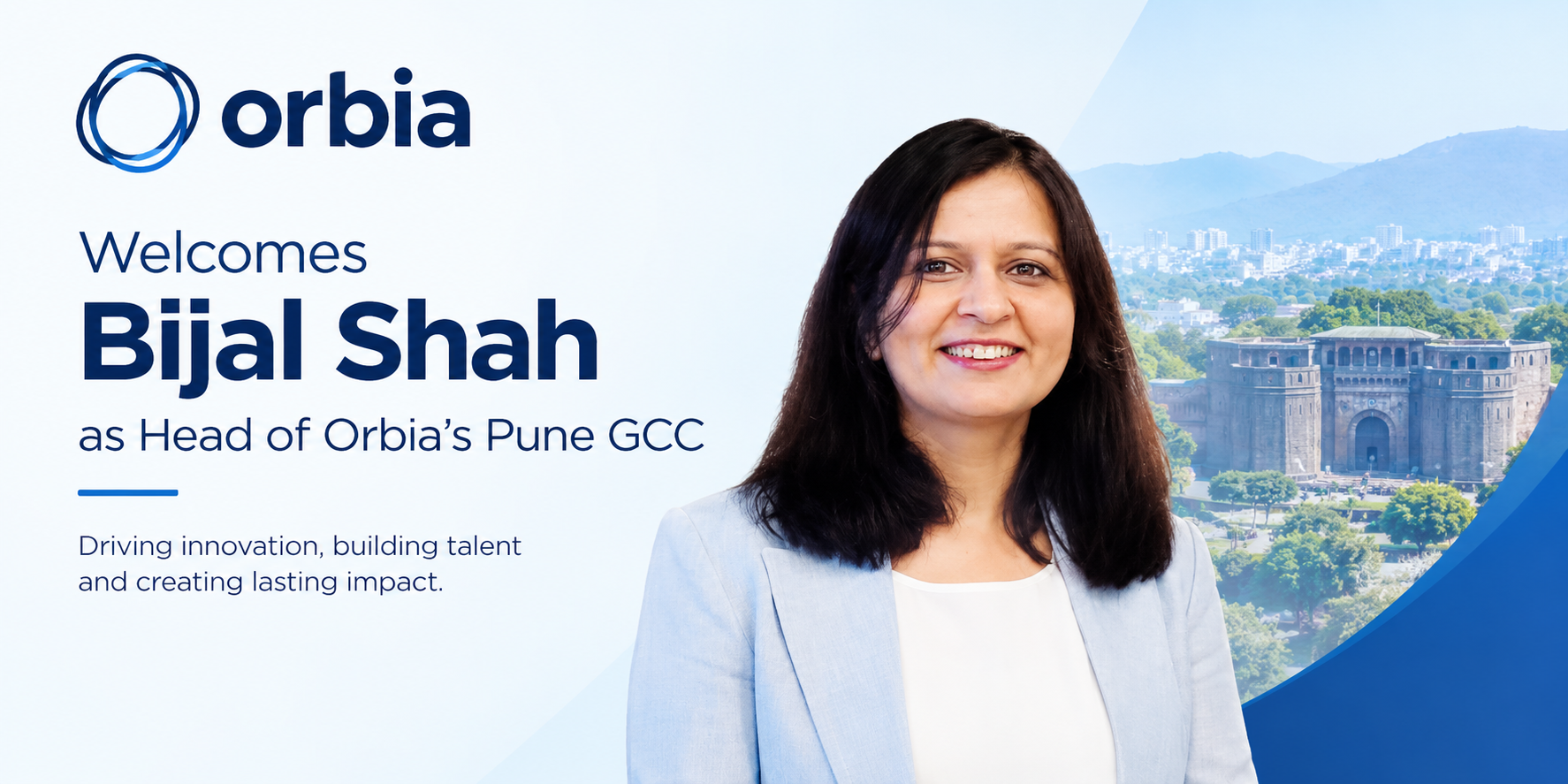
Orbia has appointed Bijal Shah as Head of its Global Capability Centre (GCC) in Pune, bringing more than 23 years of leadership experience across technology, operations, financial services and capability centres.
The appointment marks an important leadership development for Orbia’s India operations as global companies increasingly look to their GCCs to contribute beyond operational delivery and play a greater role in technology, innovation and enterprise-wide transformation.
Shah will focus on strengthening the Pune centre’s contribution to Orbia’s global businesses, with priorities spanning talent development, technology capabilities, innovation and operational excellence.
Bijal Shah Brings More Than Two Decades of Leadership Experience
Before joining Orbia, Shah served as India Country Head and Board Director at Genworth Financial, where she oversaw functions spanning technology, operations, finance, human resources and sourcing.
Her experience across multiple business functions provides a foundation for leading a capability centre that must align local operations with global organisational priorities.
Shah’s career combines technology expertise with broader operational and leadership responsibilities. This background is particularly relevant as GCC leadership roles increasingly require professionals who can connect technology execution, workforce strategy and business performance.
In a LinkedIn post announcing her new role, Shah highlighted her intention to build on the existing foundation of Orbia’s India GCC and expand its contribution through talent, technology, innovation and operational excellence.
She also emphasised the importance of moving beyond execution to establish GCCs as sources of ideas, capabilities and competitive advantage for the wider enterprise.
Orbia Strengthens Its India Capability Centre
Orbia is a global company headquartered in Mexico with businesses spanning water infrastructure, precision agriculture, connectivity solutions, polymer products, and advanced materials for the energy transition.
The company has more than 22,000 employees, commercial activities in over 100 countries and operations in more than 50 countries.
Its diversified business portfolio connects it to several important global priorities, including food and water security, connectivity, decarbonisation and the energy transition.
Within this international structure, India’s technology and operational capabilities can help support collaboration across business units and geographies.
Shah’s appointment provides dedicated leadership for Orbia’s Pune GCC as the company seeks to strengthen the centre’s capabilities and its contribution to global operations.
Why GCC Leadership Is Becoming More Strategic
The appointment comes amid a broader transformation in India’s Global Capability Centre ecosystem.
Many multinational companies initially established Indian centres to access skilled professionals, improve efficiency and support global operations. Over time, these centres have taken on broader responsibilities across technology, analytics, digital transformation and business-critical functions.
Today, the strategic value of a GCC increasingly depends on its ability to deliver measurable business outcomes rather than simply execute assigned tasks.
This shift requires leaders who can:
- Build specialised capabilities: Develop teams with the skills required to support evolving global business needs.
- Connect technology with business strategy: Ensure that technology investments and operational priorities contribute to organisational goals.
- Drive innovation: Encourage teams to identify opportunities for improvement and develop new solutions.
- Strengthen global collaboration: Build effective partnerships between India-based teams and international stakeholders.
- Improve operational excellence: Establish processes and operating models that support consistent, scalable performance.
Shah’s cross-functional experience aligns with these broader requirements for modern GCC leadership.
Pune’s Role in India’s GCC Ecosystem
Pune has developed into an important destination for multinational technology and capability operations, supported by its engineering talent, technology ecosystem and established corporate presence.
For global organisations, the city offers access to professionals across technology, operations and business functions, making it a potential base for building capabilities that serve multiple international markets.
The effectiveness of a GCC, however, depends on more than its location. Its long-term contribution is shaped by leadership, talent development, alignment with global business priorities and the ability to deliver meaningful outcomes.
For Orbia, the focus on strengthening its Pune centre reflects the importance of developing local capabilities that support its broader international business.
From Operational Delivery to Competitive Advantage
One of the central themes in Shah’s stated vision is the transition from execution-focused work to capabilities that create competitive advantage.
This distinction matters for multinational companies operating across complex industries. A strategically positioned GCC can help organisations strengthen technology capabilities, improve processes, develop specialist talent and identify opportunities that benefit the wider enterprise.
The transition requires sustained investment in people, leadership and operating models. It also requires close collaboration between the India centre and global business teams so that local capabilities remain connected to the organisation’s strategic objectives.
For Orbia, talent, technology, innovation and operational excellence are the key areas identified for strengthening the Pune GCC’s contribution.
The company’s next phase will depend on how effectively those priorities translate into capabilities and outcomes for its global businesses.
GCC Lens: What This Appointment Signals
Bijal Shah’s appointment highlights a broader development in India’s GCC landscape: leadership is becoming central to the evolution of capability centres into strategic business partners.
As global organisations expand their Indian operations, they need leaders who can develop talent, coordinate across functions and ensure that local teams contribute to global priorities.
Orbia’s leadership move reflects this changing expectation. The focus is not simply on maintaining an India presence, but on strengthening the centre’s ability to contribute through innovation, technology and operational performance.
The next stage of GCC growth will be shaped not just by the number of centres companies establish, but by the capabilities those centres build and the business value they create.
For Orbia’s Pune GCC, Shah’s appointment sets the leadership direction for that ambition.
Source: The Economic Times GCC, published October 9, 2026.
Hyderabad GCC Enters Its Next Phase of Growth
India’s Global Capability Centre (GCC) ecosystem is moving steadily from execution-led operations toward strategic ownership, and Flutter Entertainment India’s Hyderabad centre is a strong example of that transition.
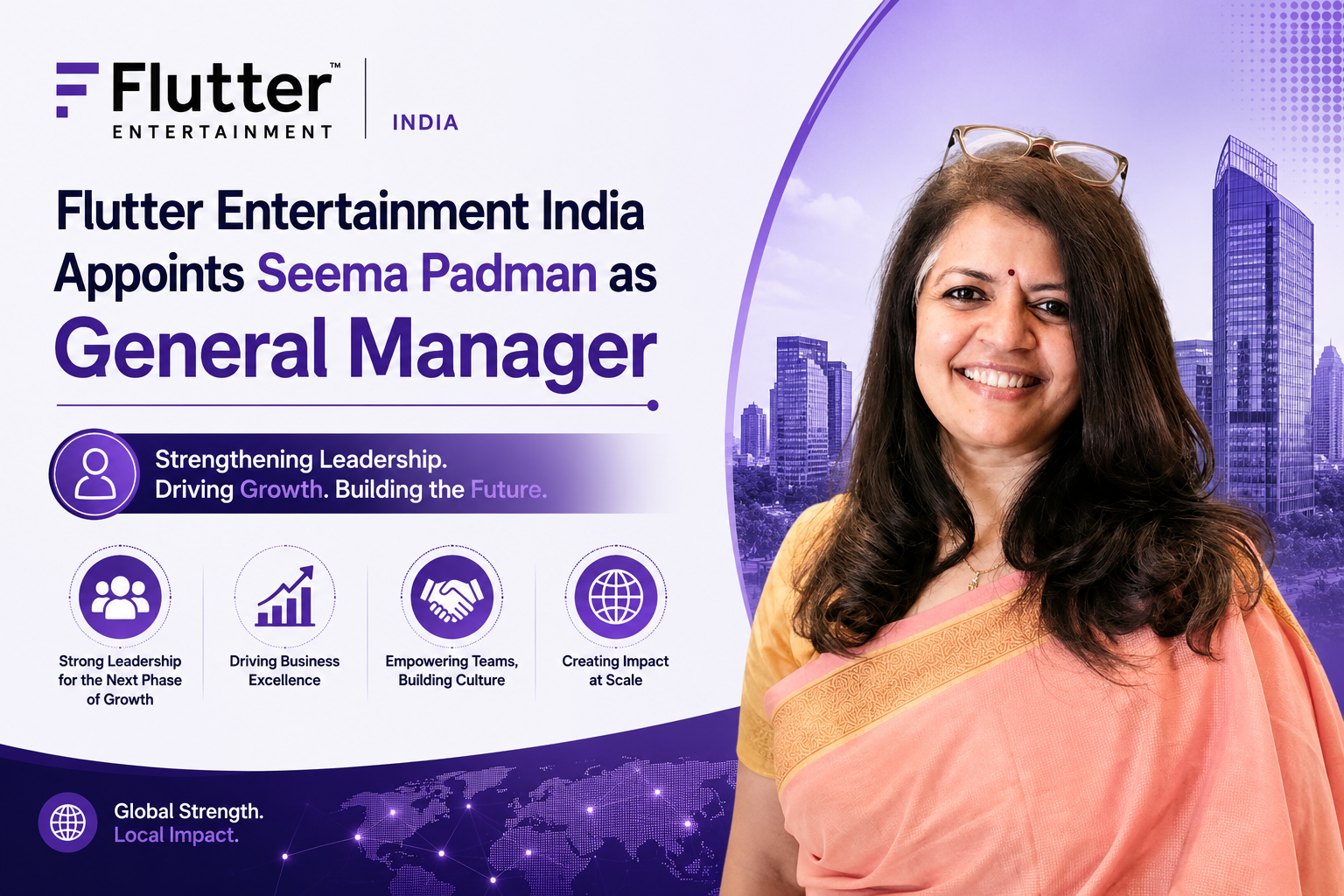
Flutter Entertainment has appointed Seema Padman as General Manager of Flutter Entertainment India, placing her at the helm of the company’s Hyderabad-based GCC as it enters its next stage of expansion and global integration.
Padman joined Flutter in April 2024 and has since played a significant role in scaling the India operation to more than 1,000 employees, while also helping establish teams across emerging and strategically important capabilities.
Her new mandate goes beyond managing headcount. It is focused on strengthening capabilities, global delivery, leadership alignment and the centre’s contribution to Flutter’s broader competitive strategy.
From People Leadership to Business Leadership
Padman’s appointment is particularly significant because her career at Flutter has extended across multiple geographies and functions.
Before taking on the General Manager role, she led the people function for India as well as Flutter’s global hubs in Cluj, Porto and Sofia.
That experience gives her exposure to different operating models, cultures and talent ecosystems.
Her new role therefore represents a natural progression from building the organisation’s people capabilities to helping shape the overall business and delivery agenda for the India centre.
As General Manager, Padman will work closely with Flutter’s global leadership team to scale capabilities, strengthen delivery across the group’s brands and build a high-performance and inclusive culture.
Hyderabad GCC Crosses the 1,000-Employee Mark
One of the clearest indicators of Flutter’s growing commitment to India is the expansion of its Hyderabad operation.
Since Padman joined in 2024, the centre has grown to more than 1,000 employees.
But the expansion is not simply about adding people.
Flutter has been building teams across high-priority and emerging capabilities, reflecting the broader evolution of GCCs in India.
Modern GCCs are increasingly being measured not by how many employees they have, but by the complexity and strategic importance of the work they own.
Flutter’s Hyderabad centre appears to be following this trajectory.
The operation supports multiple brands and functions across geographies, giving the India team an increasingly important role in the company’s global ecosystem.
Strengthening the ‘Flutter Edge’
A major part of Padman’s new responsibility will be driving Hyderabad’s contribution to Flutter Edge.
Flutter describes this as a proprietary set of capabilities spanning technology, product, talent and global scale, which collectively underpin the company’s competitive advantage.
This is an important shift in how the India GCC is positioned.
Rather than functioning purely as a delivery centre, Hyderabad is becoming part of the capability architecture that supports Flutter’s global business.
The focus is therefore moving towards creating capabilities that can be leveraged across markets and brands.
For GCCs, this is increasingly becoming the new benchmark: global relevance rather than local execution.
Talent as a Strategic Advantage
Flutter’s Hyderabad growth also highlights the increasing importance of talent strategy in GCC expansion.
Earlier, companies could establish large Indian centres primarily around access to engineering and operational talent.
Today, that is no longer enough.
GCCs need professionals who can work across geographies, understand business context, collaborate with global teams and take ownership of increasingly complex mandates.
Flutter has already been moving in this direction.
In an earlier discussion, Padman noted that the Hyderabad hub had evolved into a multi-capability operation, with some leaders taking on global or regional responsibilities. The centre had also reached around 1,000 employees supporting six brands and capabilities across multiple geographies.
This creates a strong foundation for the next phase of growth.
Building Leaders for Global Roles
The evolution of Flutter’s India operation also reflects a broader trend in the GCC market: Indian leaders are increasingly taking ownership of global mandates.
For years, GCC career paths often had a ceiling.
Employees could manage large teams and complex operations in India, but major strategic decisions were still controlled by headquarters.
That model is changing.
As Indian GCCs take ownership of products, technology, data, finance, customer experience and enterprise transformation, leadership roles are also becoming increasingly global.
Flutter’s approach demonstrates this shift.
The Hyderabad centre is not simply receiving global work; its leadership is increasingly connected to global business priorities.
AI Capability Will Be Part of the Next Chapter
Technology transformation will also play a significant role in Flutter’s future talent strategy.
The company has previously highlighted the importance of building AI capability across the workforce rather than limiting AI expertise to a small group of specialists.
Its approach includes establishing baseline AI awareness across the organisation, developing deeper expertise for selected roles and helping leaders incorporate AI-informed thinking into decision-making.
This is particularly relevant as GCCs move into an AI-led operating environment.
The future workforce will require more than technical knowledge.
Employees will need to combine technology understanding with critical thinking, business context, judgement and collaboration.
For managers, the challenge will be even greater: they will have to translate rapidly evolving technologies into practical changes in everyday work.
The Hyderabad Opportunity
Padman’s appointment comes at an important moment for Hyderabad.
The city has emerged as one of India’s major GCC destinations, with companies building large operations across technology, product development, data, finance and other strategic functions.
Flutter’s continued investment adds another dimension to this ecosystem.
The company is building a centre that supports global brands while developing capabilities that can be shared across markets.
That gives Hyderabad an opportunity to move beyond being a talent location and become an important part of Flutter’s global operating model.
What This Means for India’s GCC Ecosystem
Flutter Entertainment India’s leadership transition reflects several larger trends shaping the GCC sector.
1. GCC leadership is becoming more strategic
General Managers are increasingly responsible for business outcomes, not simply people and operations.
2. Scale is moving beyond headcount
Cross-functional capability, global mandates and ownership are becoming more important measures of GCC maturity.
3. India is producing global leaders
Leadership roles based in India are increasingly influencing operations across multiple international markets.
4. Talent and technology are converging
Future-ready GCCs will need professionals who understand both business domains and emerging technologies such as AI.
5. Culture remains critical during rapid growth
As centres cross the 1,000-employee threshold, maintaining an inclusive, high-performance culture becomes increasingly important.
The Bigger Picture
Seema Padman’s appointment is more than a leadership change.
It signals the next phase of Flutter Entertainment’s India strategy.
The Hyderabad GCC has already demonstrated that it can scale rapidly and build capabilities across emerging areas. The next challenge is to turn that scale into greater global ownership, stronger delivery and differentiated business value.
With Padman now leading the India operation, Flutter is placing its Hyderabad centre closer to the heart of its global capability strategy.
The message for the wider GCC ecosystem is clear:
India’s GCCs are no longer being built simply to support global businesses. They are increasingly being built to help shape them.
And Flutter Entertainment India’s Hyderabad operation could be one more example of that transformation in action.
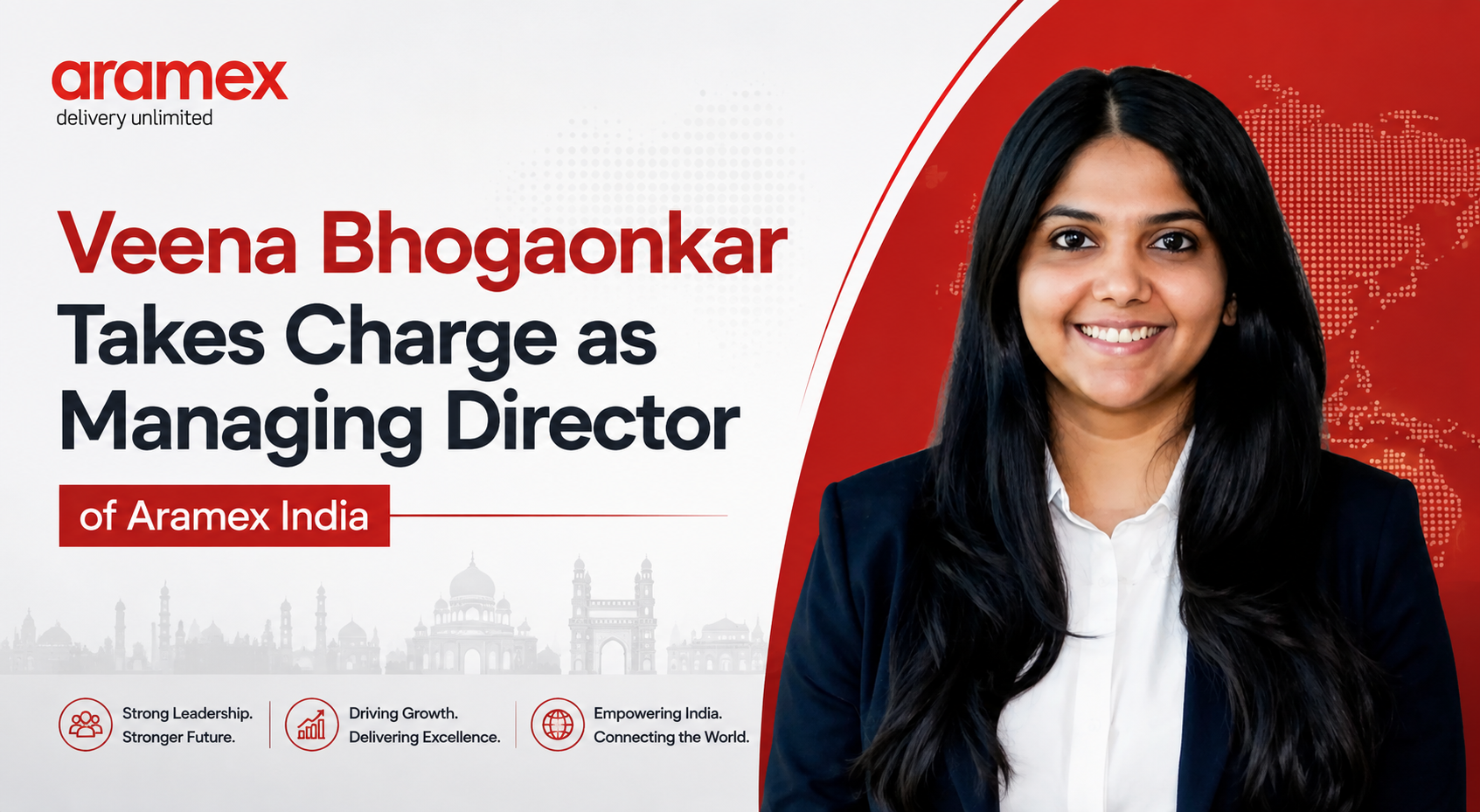
Global logistics and transportation company Aramex has announced the appointment of Veena Bhogaonkar as the new Managing Director for its India operations, reinforcing the company’s commitment to strengthening leadership and accelerating growth in one of its most strategic markets.
The leadership appointment comes as Aramex continues to expand its presence across India, focusing on enhancing operational excellence, customer experience, and supply chain innovation. Bhogaonkar brings extensive experience in logistics, supply chain management, and business transformation, making her well-positioned to lead the company’s next phase of growth in the region.
Strengthening Leadership for the Next Growth Phase
India remains a critical market for Aramex as businesses increasingly seek reliable logistics, e-commerce fulfillment, freight forwarding, and supply chain solutions. The appointment of a seasoned industry leader reflects the company’s focus on strengthening local leadership while aligning with its broader regional and global growth objectives.
In her new role, Bhogaonkar will oversee Aramex India’s operations, drive business expansion initiatives, and support the company’s efforts to deliver innovative logistics solutions to customers across industries. Her leadership is expected to play a key role in optimizing operational performance and enhancing customer value across the country.
A Leader Known for Operational Excellence
With more than a decade of experience in the logistics and supply chain sector, Bhogaonkar has built a strong reputation for driving operational efficiency, leading transformation initiatives, and building high-performing teams. Her expertise spans business growth, process optimization, customer service excellence, and organizational leadership.
Aramex highlighted her proven track record in delivering business results and fostering innovation as key factors behind her appointment. The company believes her leadership will help accelerate growth opportunities in India’s rapidly evolving logistics landscape.
India’s Expanding Logistics Opportunity
India’s logistics sector is undergoing a significant transformation, driven by digitalization, e-commerce growth, infrastructure development, and increasing demand for integrated supply chain solutions. Organizations across industries are investing in technology-enabled logistics networks to improve efficiency, reduce costs, and enhance customer experiences.
As these trends continue to reshape the market, logistics providers are strengthening their leadership teams to capitalize on emerging opportunities. Aramex’s latest leadership appointment reflects its confidence in India’s long-term growth potential and its commitment to expanding capabilities in the region.
Aramex’s Global Presence
Headquartered in the UAE, Aramex operates across more than 70 countries and serves customers through an extensive network spanning over 600 cities worldwide. The company provides a comprehensive portfolio of services, including international express delivery, domestic transportation, freight forwarding, logistics, and supply chain solutions. With a workforce of more than 16,000 professionals globally, Aramex continues to invest in innovation and operational excellence to support customers across diverse industries.
Looking Ahead
The appointment of Veena Bhogaonkar as Managing Director marks an important step in Aramex India’s growth journey. As the logistics industry evolves and customer expectations continue to rise, strong leadership will be critical in driving innovation, operational efficiency, and sustainable business growth.
With Bhogaonkar at the helm, Aramex India is expected to further strengthen its market position, expand customer relationships, and support the increasing logistics needs of businesses across the country.
Data Source : Link
-

 Business6 months ago
S&P Global Expands India Footprint with New Gurugram Hub
-

 Press Release6 months ago
KnowVisory Global Launches Payroll Processing and Administration Services to Simplify Compliance for Growing Businesses
-

 Bengaluru6 months ago
Abercrombie & Fitch Enters India’s GCC Landscape with Bengaluru Launch
-
 Politics6 months ago
Maximus Expands Hyderabad GCC: Strengthening India’s Role in Global Healthcare & Public Sector Operations
-

 Bengaluru2 months ago
DePuy Synthes Selects Bengaluru for New GCC, Targets 500 Hires
-
 Bengaluru5 months ago
Commonwealth Bank Appoints Shubha Iyer as CEO of CommBank India to Strengthen GCC and Digital Transformation Strategy
-
 New GCC4 months ago
Generac Launches First India Global Capability Center in Pune
-

 Business6 months ago
GCC in Coimbatore: Why It’s the Next Big Hub for Global Capability Centers