
AI
Progress Software Expands AI Capabilities with New GCC in Bengaluru

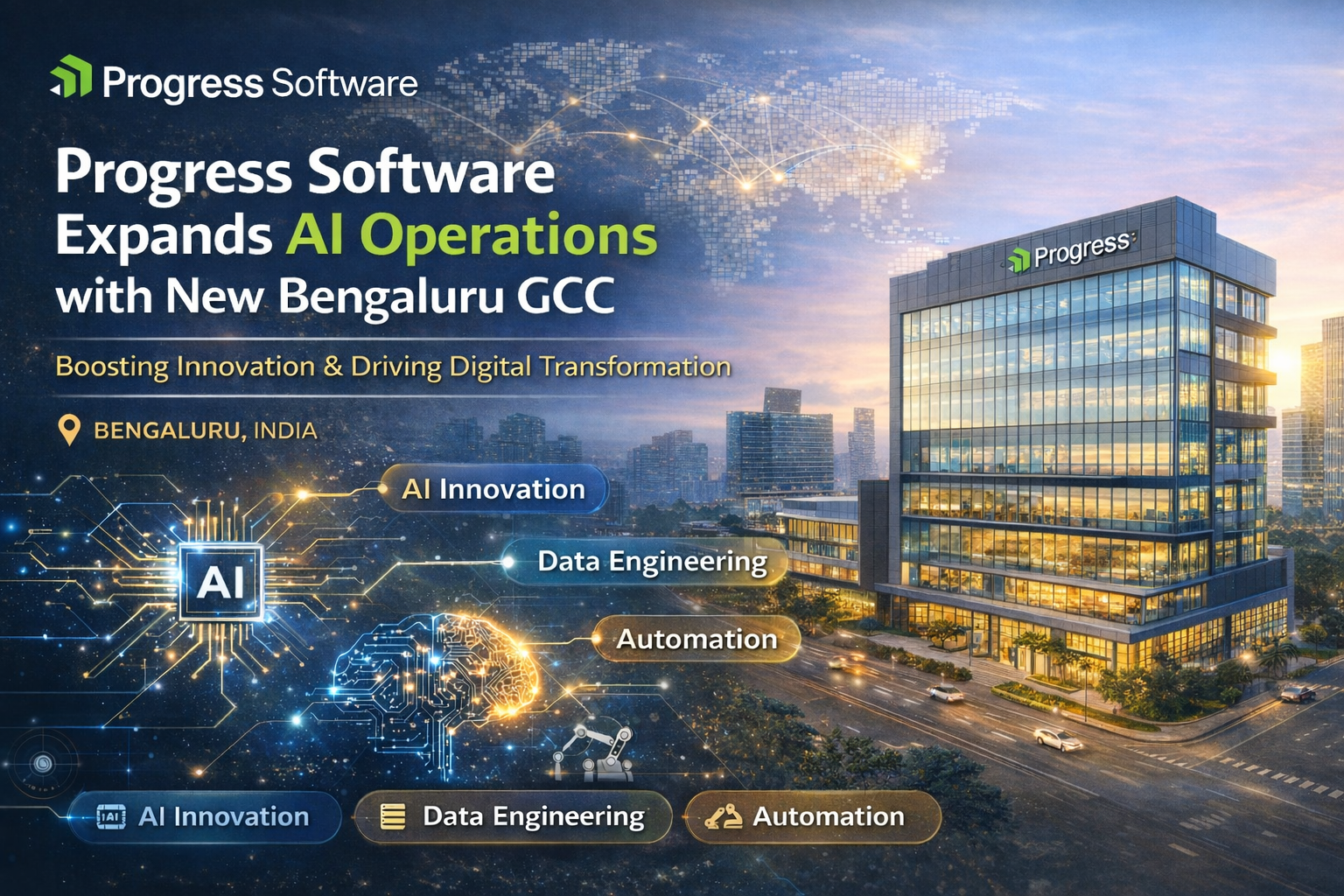
Global enterprises are no longer viewing Global Capability Centers (GCCs) as just operational backbones—they are now becoming strategic engines for innovation. Reinforcing this shift, Progress Software has announced the expansion of its footprint in Bengaluru with a new Global Capability Center (GCC) focused on advancing AI-driven operations.
This move underscores a growing trend: multinational companies are increasingly leveraging India’s deep technology talent pool to accelerate digital transformation initiatives.
Strengthening AI-Led Operations
The new GCC will play a critical role in enhancing Progress Software’s artificial intelligence (AI) capabilities. Rather than functioning as a traditional support center, the Bengaluru hub is designed to lead innovation across areas such as:
- AI-powered product development
- Cloud-based enterprise solutions
- Data engineering and analytics
- Automation and intelligent workflows
By embedding AI at the core of its operations, Progress Software is aiming to deliver faster, smarter, and more scalable solutions to its global customer base.
Why Bengaluru Continues to Attract Global GCC Investments
Bengaluru has firmly established itself as a global GCC hotspot. The city offers a unique combination of:
- Highly skilled engineering and AI talent
- Mature startup and innovation ecosystem
- Strong infrastructure for global operations
- Proven track record in delivering high-value R&D
For companies like Progress Software, setting up or expanding a GCC in Bengaluru is not just about cost efficiency—it’s about accessing innovation at scale.
GCCs Evolving into Innovation Hubs
The expansion of Progress Software’s GCC reflects a broader industry evolution. Today’s GCCs are:
- Driving product innovation rather than just supporting it
- Leading AI and digital transformation initiatives
- Acting as strategic extensions of global headquarters
- Contributing directly to revenue and business growth
This transition marks a shift from “offshore delivery centers” to “global innovation hubs.”
Talent as the Core Differentiator
At the heart of this expansion is talent. The Bengaluru GCC will bring together engineers, data scientists, and AI specialists to collaborate on next-generation solutions.
The focus is not just on hiring—but on building high-performance teams that can:
- Experiment with emerging technologies
- Scale AI use cases across business functions
- Deliver measurable business outcomes
What This Means for the Future of GCCs
Progress Software’s investment signals a clear direction for the future:
- AI will be central to GCC strategies
- India will remain a key global innovation destination
- GCCs will continue to move up the value chain
- Enterprises will rely on GCCs for competitive advantage
As more organizations follow this model, GCCs will increasingly become the driving force behind enterprise transformation.
Conclusion
The launch of Progress Software’s new GCC in Bengaluru is more than an expansion—it’s a strategic move toward AI-first operations and global innovation.
For the GCC ecosystem, this is another strong validation that the future lies in intelligence, agility, and innovation-driven delivery models.
The New Phase of AI in GCCs
For years, artificial intelligence (AI) in Global Capability Centers (GCCs) was largely confined to pilot projects, proofs of concept, and innovation labs. Organizations explored AI’s potential, tested use cases, and experimented with automation—but often struggled to scale these initiatives into meaningful business outcomes.
Today, that phase is over.
GCCs are now entering a decisive stage where AI is no longer an experiment—it is a core driver of enterprise value. The focus has shifted from “Can we implement AI?” to “How can AI deliver measurable impact across the business?”
This transition marks a fundamental evolution in how GCCs operate and contribute to global organizations.
Moving Beyond Proof of Concept
One of the biggest challenges enterprises faced in the early AI journey was moving beyond isolated use cases. Many AI initiatives delivered promising results in controlled environments but failed to scale due to integration issues, lack of governance, or unclear ROI.
GCCs are now solving this problem by:
- Embedding AI directly into business workflows
- Aligning AI initiatives with enterprise KPIs
- Building reusable AI frameworks and platforms
- Ensuring cross-functional collaboration between tech and business teams
Instead of running disconnected pilots, GCCs are designing AI systems that are deeply integrated into core operations such as finance, supply chain, customer experience, and HR.
AI as a Strategic Business Enabler
AI is no longer viewed as a support function—it is becoming a strategic enabler of growth and efficiency.
GCCs are leading this transformation by:
- Automating complex decision-making processes
- Enhancing predictive capabilities across business functions
- Driving real-time insights for leadership teams
- Improving customer personalization at scale
For example, AI-powered analytics are enabling organizations to forecast demand more accurately, optimize pricing strategies, and reduce operational risks. In finance, AI is accelerating reporting cycles and improving compliance monitoring. In customer operations, it is transforming engagement through intelligent automation and conversational AI.
The Rise of Enterprise-Scale AI Deployment
What differentiates the current wave of AI adoption is scale.
GCCs are no longer deploying AI in silos—they are rolling out enterprise-wide solutions that impact multiple geographies and business units simultaneously.
Key enablers of this scale include:
- Robust data infrastructure and governance frameworks
- Cloud-based AI platforms
- Standardized deployment models
- Strong leadership alignment on AI priorities
By centralizing AI capabilities within GCCs, organizations can ensure consistency, scalability, and faster time-to-value.
Building AI-First Talent and Capabilities
The shift from experimentation to impact is also being driven by talent transformation.
GCCs are investing heavily in:
- AI and machine learning specialists
- Data engineers and architects
- Domain experts with AI fluency
- Upskilling programs for existing workforce
This combination of technical expertise and business understanding allows GCCs to build solutions that are not only innovative but also practical and scalable.
Moreover, GCCs are emerging as global hubs for AI talent, attracting skilled professionals and fostering innovation ecosystems.
Stronger Governance and Measurable ROI
Another critical factor in this evolution is governance.
Organizations are now placing greater emphasis on:
- AI ethics and responsible AI frameworks
- Data privacy and regulatory compliance
- Performance tracking and ROI measurement
GCCs are playing a central role in establishing these governance structures, ensuring that AI initiatives are transparent, accountable, and aligned with business goals.
Importantly, success is now measured not by experimentation metrics, but by tangible outcomes such as cost savings, revenue growth, productivity gains, and customer satisfaction.
Industry-Wide Impact
The transition to enterprise-level AI is being seen across industries:
- Banking & Financial Services: Fraud detection, risk modeling, and automated compliance
- Healthcare: Predictive diagnostics and operational efficiency
- Retail & E-commerce: Personalized recommendations and supply chain optimization
- Manufacturing: Predictive maintenance and smart production systems
In each case, GCCs are acting as execution engines, turning AI strategy into operational reality.
The Road Ahead: AI as a Core GCC Mandate
As enterprises double down on digital transformation, the role of GCCs will continue to expand.
The next phase will focus on:
- AI-led innovation at scale
- Integration of generative AI across functions
- Autonomous operations powered by AI
- Continuous optimization through real-time intelligence
GCCs that successfully navigate this transition will not just support global operations—they will define the future of enterprise performance.
Conclusion
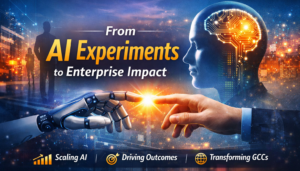
The journey from AI experimentation to enterprise impact represents a turning point for Global Capability Centers.
What was once exploratory is now essential.
GCCs are no longer testing the waters—they are building the engines that power modern enterprises. By scaling AI, embedding it into core operations, and delivering measurable outcomes, they are redefining their role from cost centers to strategic value creators.
In this new era, the question is no longer whether GCCs should adopt AI—but how fast they can scale it to stay ahead.
Source : Link
-
 Tech3 weeks ago
How Revolut Is Turning India Into Its Global GCC Powerhouse
-

 BFSI3 weeks ago
OwnGCC Launches to Help Global Enterprises Build and Scale High-Impact GCCs in Just 90 Days
-
 BFSI3 weeks ago
How Deutsche Bank Is Turning Its India GCC into an AI Innovation Engine
-

 Business2 weeks ago
GCC in Coimbatore: Why It’s the Next Big Hub for Global Capability Centers
-
 Business2 weeks ago
How Flutter Entertainment India GCC Is Building Global Talent in a High-Performance Culture
-

 Finance2 weeks ago
InvoiceCloud Expands Hyderabad GCC, Plans to Hire 150 Experts to Drive Fintech Innovation
-
 Politics2 weeks ago
Maximus Expands Hyderabad GCC: Strengthening India’s Role in Global Healthcare & Public Sector Operations
-

 Bengaluru2 weeks ago
India’s GCC Leasing Boom: Record 9.1 Million Sq. Ft. in Q1 2026 Signals a New Growth Era