Tech
How Revolut Is Turning India Into Its Global GCC Powerhouse

Global fintech company Revolut is making a decisive move that reflects a larger shift in the Global Capability Center (GCC) landscape — placing India at the core of its global operations strategy.
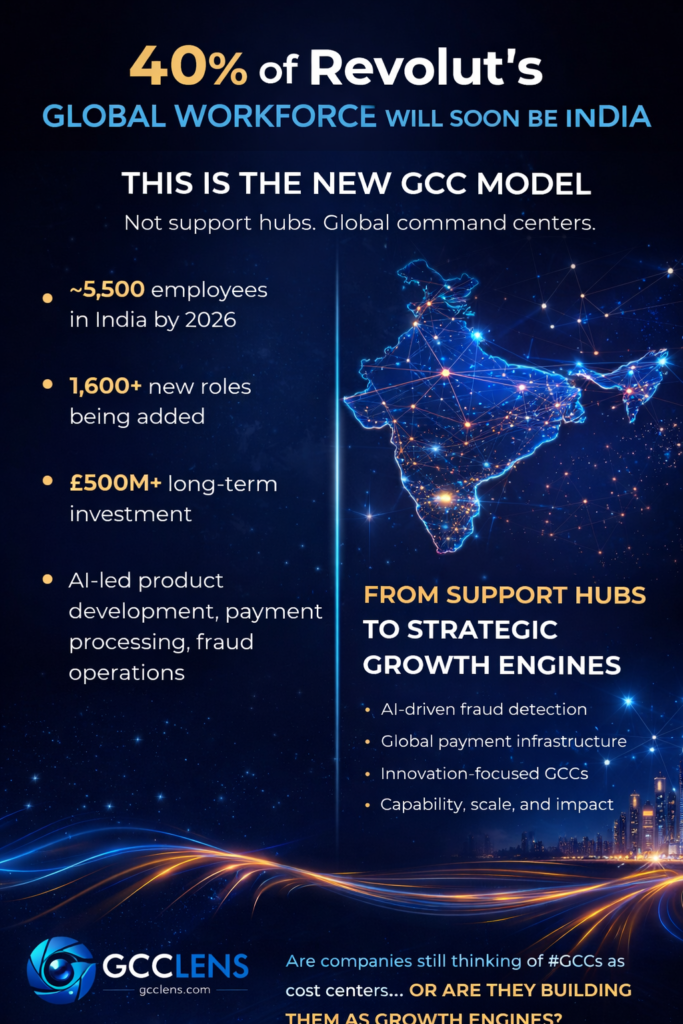
India to Host 40% of Revolut’s Global Workforce
By the end of 2026, Revolut plans to base around 40% of its global workforce in India, signaling a major expansion of its GCC footprint. With a current global headcount of approximately 12,000 employees, this move will significantly increase India’s share in the company’s operations.
To support this growth, the company will add nearly 1,600 new roles, taking its India workforce to about 5,500 employees.

💼 From Support Hub to Strategic Core
This expansion is not just about scale — it reflects a structural shift in how GCCs operate.
Revolut’s India center will handle:
- Product development
- Customer and operational support
- Payment processing
- Fraud detection and investigations
These are business-critical functions, not traditional back-office roles, reinforcing India’s evolution into a high-value innovation hub.
🤖 AI, Automation & Global Operations
India already plays a significant role in Revolut’s global ecosystem:
- Around one-third of company processes are managed from India
- Key functions include transaction monitoring and AI-driven alerts
- Innovations like video-based KYC systems developed in India are being deployed globally
This highlights how GCCs are now contributing to global product and technology innovation, not just execution.
💰 Long-Term Investment Commitment
Revolut has committed £500 million (approx. $670 million) toward its India business and GCC expansion over five years.
This level of investment underscores India’s role as a long-term strategic hub, driven by:
- Deep talent pool
- Strong technical capabilities
- Cost-to-value advantage
🌍 GCC Expansion vs India Market Entry
Interestingly, Revolut’s GCC growth is separate from its India market entry strategy.
While the company is preparing to launch its financial products in India, the GCC is focused purely on supporting global operations and scaling capabilities worldwide.
📊 What This Means for the GCC Ecosystem
Revolut’s move reflects broader industry trends:
1. GCCs are becoming global command centers
Companies are centralizing core operations in India, not just outsourcing tasks.
2. Talent is the biggest driver
India is being recognized as one of the deepest global talent markets.
3. Innovation is shifting to GCCs
AI, automation, and product innovation are increasingly GCC-led.
4. Scale + Strategy = New GCC Model
This is no longer about cost savings — it’s about building global capability at scale.
🔍 Final Take
Revolut’s India expansion is more than a hiring plan — it’s a blueprint for the next generation of GCCs.
As global companies rethink operating models, India is rapidly transitioning from a support destination to a strategic growth engine powering global business outcomes.