
Bengaluru
Building Leadership Teams for Global Capability Centers

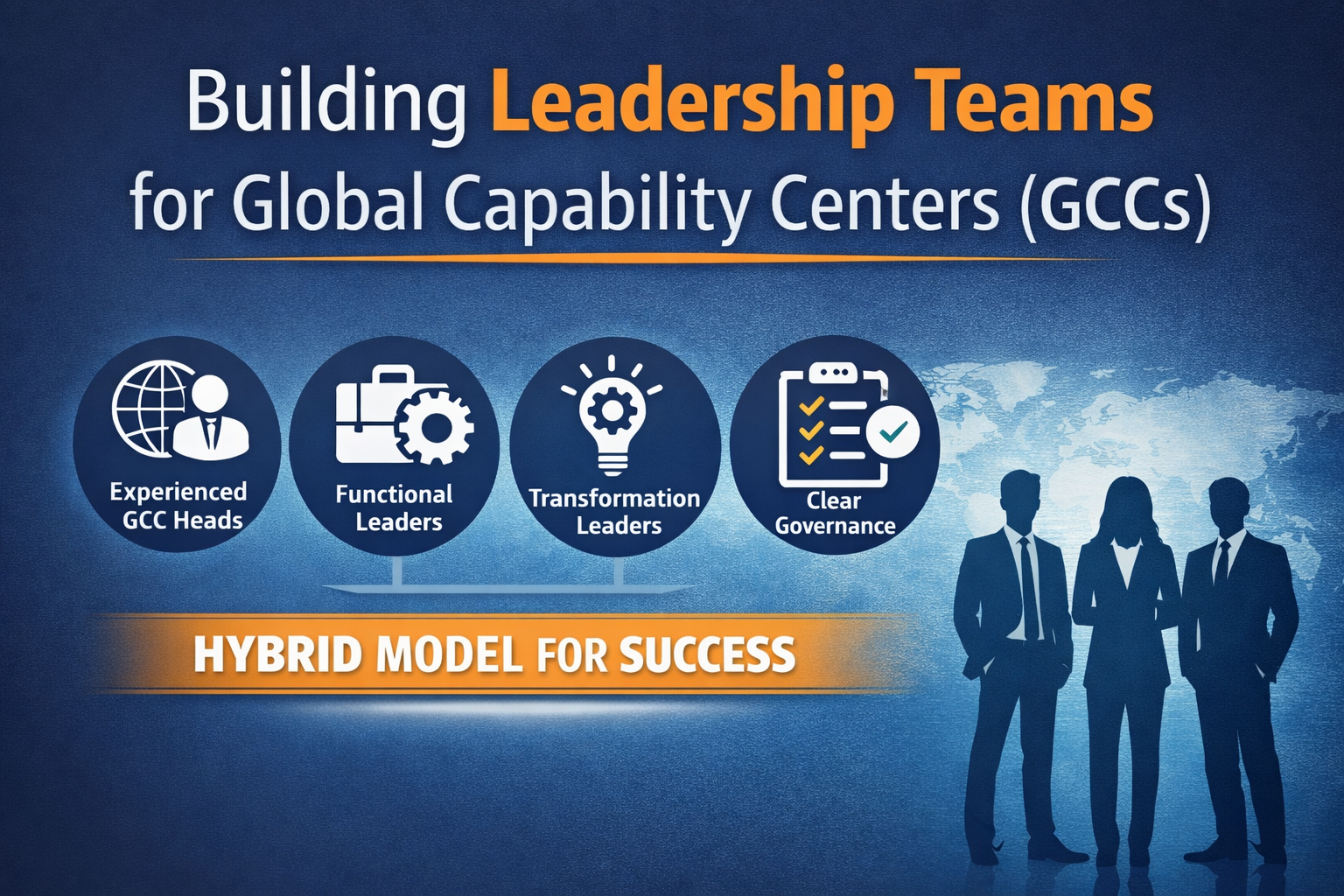
Introduction: Why Leadership Defines GCC Success
Global Capability Centers (GCCs) are no longer just offshore execution hubs—they are strategic engines driving innovation, transformation, and enterprise value. As organizations expand their GCC footprint, one factor consistently determines success or failure: leadership.
Building the right leadership team is not about replicating headquarters—it’s about creating a locally empowered, globally aligned leadership structure that can operate with autonomy while driving enterprise-wide objectives.
The Evolving Role of GCC Leadership
Traditionally, GCC leaders were focused on operational efficiency, cost optimization, and delivery excellence. Today, their role has expanded significantly.
Modern GCC leadership teams are responsible for:
- Driving innovation and digital transformation
- Managing global stakeholder relationships
- Building high-performance talent ecosystems
- Ensuring governance, compliance, and scalability
- Acting as strategic partners to global business units
This shift requires leaders who are not just operators, but visionaries, integrators, and change agents.
Core Leadership Roles in a GCC
A strong GCC leadership team is structured to balance operational excellence with strategic growth. Key roles include:
1. GCC Head / Managing Director
The GCC Head acts as the face of the center and is responsible for:
- Defining strategic direction
- Aligning with global leadership
- Driving growth and capability expansion
- Ensuring governance and performance
This role requires a blend of business acumen, cultural intelligence, and stakeholder management.
2. Functional Leaders (HR, Finance, IT, Operations)
Each function plays a critical role in scaling the GCC:
- HR Leader: Builds talent pipelines, culture, and employer branding
- Finance Leader: Ensures cost control, compliance, and financial planning
- IT Leader: Drives digital transformation and infrastructure
- Operations Leader: Manages delivery excellence and process optimization
These leaders must operate with a global mindset while adapting to local dynamics.
3. Transformation & Innovation Leaders
As GCCs evolve into innovation hubs, organizations are introducing roles focused on:
- Automation and AI adoption
- Process re-engineering
- Digital product development
- Data and analytics strategy
These leaders help shift the GCC from execution to innovation.
4. Client & Stakeholder Engagement Leaders
Strong stakeholder alignment is critical. This role focuses on:
- Managing relationships with global business units
- Driving collaboration across geographies
- Ensuring alignment with enterprise priorities
Without this layer, GCCs risk becoming siloed and underutilized.
Key Traits of High-Impact GCC Leaders
Building a leadership team is not just about roles—it’s about selecting the right capabilities.
1. Global Mindset with Local Execution
Leaders must understand global business priorities while navigating local regulatory, cultural, and talent landscapes.
2. Strategic Thinking Over Tactical Execution
The ability to move beyond day-to-day operations and contribute to enterprise strategy is critical.
3. Change Management Expertise
GCCs often undergo rapid transformation. Leaders must drive change across teams, processes, and technologies.
4. Talent-Centric Leadership
Attracting and retaining top talent in competitive markets like India requires strong people leadership.
5. Collaboration & Influence
GCC leaders must influence stakeholders across geographies without direct authority.
Building vs Hiring: What’s the Right Approach?
Organizations often face a key decision: build leadership internally or hire externally.
Hiring External Leaders
Pros:
- Brings fresh perspectives
- Accelerates setup and scaling
- Adds global experience
Cons:
- Cultural misalignment risks
- Longer onboarding time
Developing Internal Leaders
Pros:
- Strong alignment with company culture
- Faster integration
- Higher retention
Cons:
- May lack GCC-specific experience
- Slower transformation
Best Practice: Hybrid Model
The most successful GCCs adopt a hybrid approach:
- Hire a strong GCC Head with prior experience
- Build and groom functional leaders internally
- Add external experts for transformation roles
Common Mistakes to Avoid
1. Replicating HQ Structure Without Localization
What works in the US or Europe may not work in India. Localization is key.
2. Underinvesting in Leadership
Many organizations focus on hiring junior talent but delay leadership hiring—this creates long-term inefficiencies.
3. Lack of Clear Governance
Ambiguity in roles and responsibilities leads to misalignment and delays.
4. Ignoring Culture Building
Leadership teams must actively shape a distinct GCC culture, not just mirror headquarters.
How to Build a Scalable Leadership Framework
To ensure long-term success, organizations should:
1. Define a Clear Leadership Blueprint
- Roles and responsibilities
- Reporting structures
- Decision-making authority
2. Align Leadership with Business Objectives
Ensure every leader is tied to measurable business outcomes.
3. Invest in Leadership Development
- Training programs
- Global exposure
- Cross-functional collaboration
4. Enable Autonomy with Accountability
Empower leaders to make decisions while maintaining strong governance frameworks.
The Future of GCC Leadership
As GCCs continue to evolve, leadership teams will become:
- More data-driven
- More innovation-focused
- More integrated with global strategy
The next generation of GCC leaders will not just manage operations—they will shape the future of global enterprises.
Conclusion
Building a leadership team for a GCC is a strategic investment, not an operational task. The right leadership structure can transform a GCC from a cost center into a global innovation powerhouse.
Organizations that prioritize leadership early, invest in the right capabilities, and adopt a hybrid approach will be best positioned to unlock the full potential of their GCCs.
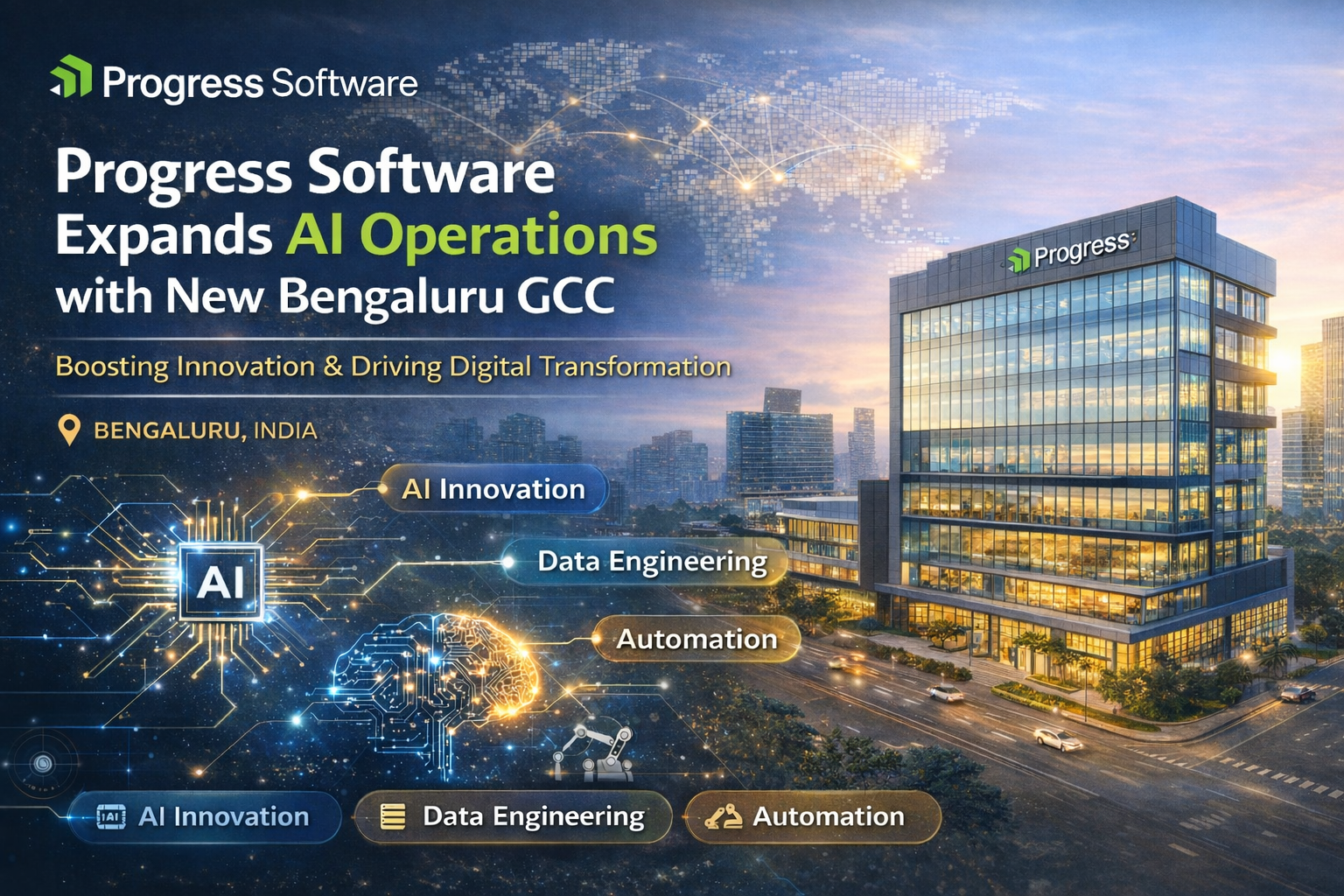
Global enterprises are no longer viewing Global Capability Centers (GCCs) as just operational backbones—they are now becoming strategic engines for innovation. Reinforcing this shift, Progress Software has announced the expansion of its footprint in Bengaluru with a new Global Capability Center (GCC) focused on advancing AI-driven operations.
This move underscores a growing trend: multinational companies are increasingly leveraging India’s deep technology talent pool to accelerate digital transformation initiatives.
Strengthening AI-Led Operations
The new GCC will play a critical role in enhancing Progress Software’s artificial intelligence (AI) capabilities. Rather than functioning as a traditional support center, the Bengaluru hub is designed to lead innovation across areas such as:
- AI-powered product development
- Cloud-based enterprise solutions
- Data engineering and analytics
- Automation and intelligent workflows
By embedding AI at the core of its operations, Progress Software is aiming to deliver faster, smarter, and more scalable solutions to its global customer base.
Why Bengaluru Continues to Attract Global GCC Investments
Bengaluru has firmly established itself as a global GCC hotspot. The city offers a unique combination of:
- Highly skilled engineering and AI talent
- Mature startup and innovation ecosystem
- Strong infrastructure for global operations
- Proven track record in delivering high-value R&D
For companies like Progress Software, setting up or expanding a GCC in Bengaluru is not just about cost efficiency—it’s about accessing innovation at scale.
GCCs Evolving into Innovation Hubs
The expansion of Progress Software’s GCC reflects a broader industry evolution. Today’s GCCs are:
- Driving product innovation rather than just supporting it
- Leading AI and digital transformation initiatives
- Acting as strategic extensions of global headquarters
- Contributing directly to revenue and business growth
This transition marks a shift from “offshore delivery centers” to “global innovation hubs.”
Talent as the Core Differentiator
At the heart of this expansion is talent. The Bengaluru GCC will bring together engineers, data scientists, and AI specialists to collaborate on next-generation solutions.
The focus is not just on hiring—but on building high-performance teams that can:
- Experiment with emerging technologies
- Scale AI use cases across business functions
- Deliver measurable business outcomes
What This Means for the Future of GCCs
Progress Software’s investment signals a clear direction for the future:
- AI will be central to GCC strategies
- India will remain a key global innovation destination
- GCCs will continue to move up the value chain
- Enterprises will rely on GCCs for competitive advantage
As more organizations follow this model, GCCs will increasingly become the driving force behind enterprise transformation.
Conclusion
The launch of Progress Software’s new GCC in Bengaluru is more than an expansion—it’s a strategic move toward AI-first operations and global innovation.
For the GCC ecosystem, this is another strong validation that the future lies in intelligence, agility, and innovation-driven delivery models.

India’s Global Capability Center (GCC) ecosystem continues to accelerate, and the recent expansion by Fidelity Investments India in Bengaluru is a strong indicator of where the industry is headed next. More than just a real estate move, this development reflects a deeper transformation in how global enterprises are leveraging India—not just for cost efficiency, but for innovation, talent, and long-term strategic growth.
A Strategic Expansion, Not Just a New Office
Fidelity’s new office in Bengaluru is not simply about adding more workspace—it represents a deliberate investment in scaling high-value capabilities. As organizations increasingly shift toward digital-first operations, GCCs are evolving into integrated hubs that drive business outcomes rather than support them.
The expansion underscores Fidelity’s commitment to strengthening its India operations, enabling teams to work in more agile, collaborative, and technology-enabled environments. This aligns with a broader industry trend where GCCs are being reimagined as centers of excellence across domains like data analytics, cybersecurity, AI, and product engineering.
Bengaluru Reinforces Its GCC Leadership
Bengaluru continues to dominate as India’s GCC capital, attracting global enterprises across financial services, technology, healthcare, and more. Fidelity’s expansion further cements the city’s reputation as a preferred destination for organizations seeking deep talent pools and a mature ecosystem.
Several factors continue to drive Bengaluru’s appeal:
- Access to highly skilled tech and financial talent
- Strong startup and innovation ecosystem
- Mature infrastructure for global operations
- Proximity to leading research and academic institutions
As companies like Fidelity scale their presence, the city’s role is evolving from a delivery hub to a strategic innovation powerhouse.
The Shift Toward Experience-Driven Workspaces
One of the defining aspects of modern GCC expansion is the emphasis on workplace experience. Fidelity’s new office reflects this shift—designed to foster collaboration, flexibility, and employee well-being.
Today’s GCCs are investing in:
- Hybrid work enablement
- Smart office technologies
- Collaborative zones and innovation labs
- Employee-centric design and amenities
This evolution is critical in attracting and retaining top talent, especially in competitive markets like Bengaluru.
Talent Strategy at the Core
At the heart of this expansion lies a clear focus on talent. Fidelity is not just expanding physical capacity—it is building a future-ready workforce capable of driving global business priorities.
India’s GCCs are increasingly hiring for:
- Advanced analytics and data science roles
- Cloud and platform engineering
- Cybersecurity and risk management
- Digital product development
This reflects a fundamental shift—from transactional roles to strategic, high-impact functions.
What This Means for the GCC Ecosystem
Fidelity’s move is part of a larger pattern reshaping the GCC landscape in India:
- From Cost Arbitrage to Value Creation
GCCs are no longer measured by cost savings alone—they are now critical to innovation and revenue growth. - Expansion Beyond Scale to Capability Depth
Companies are focusing on building specialized capabilities rather than just increasing headcount. - India as a Long-Term Strategic Base
Global firms are doubling down on India as a core part of their global operating model. - Workplace Transformation as a Differentiator
The quality of workspace and employee experience is becoming a competitive advantage.
The Bigger Picture
Fidelity’s new office is more than an isolated announcement—it’s a reflection of a maturing GCC ecosystem that is entering its next phase. As global organizations continue to invest in India, the focus is clearly shifting toward innovation, talent, and long-term value creation.
For stakeholders across the ecosystem—enterprises, policymakers, and service providers—this signals an opportunity to rethink how GCCs are built and scaled in the coming decade.
Final Take
The expansion of Fidelity Investments India in Bengaluru is a strong validation of India’s growing importance in global business strategy. As GCCs continue to evolve, the winners will be those who invest not just in infrastructure, but in innovation, talent, and experience.
For GCC Lens, this marks yet another milestone in tracking how India is redefining the global capability center model—from support functions to strategic engines of growth.
Data Source : link

A Strategic Expansion into India’s Innovation Ecosystem
Global retail major Abercrombie & Fitch has officially entered India’s Global Capability Center (GCC) ecosystem with the launch of its new center in Bengaluru. This move marks a significant milestone in the brand’s global transformation journey, as it increasingly leans into digital, analytics, and technology-led operations.
India continues to attract global enterprises looking to build high-value capability hubs—not just for cost optimization, but for innovation, agility, and access to world-class talent.
Why Bengaluru Continues to Dominate GCC Expansion
Bengaluru has emerged as the epicenter for GCC growth in India, and Abercrombie & Fitch’s decision reinforces this trend. The city offers a unique combination of:
- Deep talent pools in engineering, analytics, and digital commerce
- A mature startup and innovation ecosystem
- Strong infrastructure for global operations
- Proven success in hosting Fortune 500 GCCs
For global retailers undergoing digital transformation, Bengaluru provides the ideal environment to build scalable, tech-driven operations.
Inside Abercrombie & Fitch’s GCC Vision
The newly launched GCC is expected to play a critical role in supporting the company’s global business functions. Rather than operating as a back-office unit, the center is being positioned as a strategic hub focused on:
- Advanced analytics and data science
- Digital product development
- IT and enterprise technology support
- Customer experience optimization
This reflects a broader shift in how GCCs are being designed—moving away from transactional support toward value creation and innovation.
GCCs: From Cost Efficiency to Strategic Value Creation
Abercrombie & Fitch’s entry into India’s GCC ecosystem highlights a larger industry trend. Today’s GCCs are no longer just cost-saving centers; they are:
- Innovation engines driving digital transformation
- Centers of excellence for AI, data, and automation
- Strategic partners in global decision-making
Retail and consumer brands, in particular, are leveraging GCCs to reimagine customer engagement, supply chains, and omnichannel experiences.
Talent as the Core Growth Driver
One of the biggest drivers behind this expansion is India’s unmatched talent ecosystem. Companies like Abercrombie & Fitch are tapping into:
- Skilled professionals in AI, ML, and data analytics
- Digital commerce and product engineering experts
- Agile teams capable of working across global time zones
This talent advantage enables organizations to accelerate innovation while maintaining operational efficiency.
What This Means for India’s GCC Ecosystem
The entry of global retail brands into the GCC space signals a diversification of industries adopting this model. While sectors like BFSI and technology have traditionally led GCC growth, retail and lifestyle brands are now:
- Investing in digital-first capabilities
- Building global tech hubs in India
- Strengthening their direct-to-consumer strategies
This evolution will further solidify India’s position as a global GCC powerhouse.
The Road Ahead: Retail GCCs on the Rise
As consumer expectations evolve and digital becomes central to retail success, more global brands are expected to follow suit. GCCs will increasingly focus on:
- Personalization through data and AI
- Seamless omnichannel experiences
- Supply chain intelligence and automation
Abercrombie & Fitch’s Bengaluru GCC is not just an expansion—it’s a signal of where the future of retail operations is headed.
Conclusion
The launch of Abercrombie & Fitch’s GCC in Bengaluru reflects a broader shift in how global companies view India—not just as a cost-efficient destination, but as a strategic innovation partner.
As GCCs continue to evolve into high-impact business enablers, India’s role in shaping global enterprise transformation will only grow stronger.
Data Source : Link
-
 Tech3 weeks ago
How Revolut Is Turning India Into Its Global GCC Powerhouse
-

 BFSI2 weeks ago
OwnGCC Launches to Help Global Enterprises Build and Scale High-Impact GCCs in Just 90 Days
-
 BFSI2 weeks ago
How Deutsche Bank Is Turning Its India GCC into an AI Innovation Engine
-

 Business2 weeks ago
GCC in Coimbatore: Why It’s the Next Big Hub for Global Capability Centers
-

 Business2 weeks ago
How Flutter Entertainment India GCC Is Building Global Talent in a High-Performance Culture
-

 Finance2 weeks ago
InvoiceCloud Expands Hyderabad GCC, Plans to Hire 150 Experts to Drive Fintech Innovation
-
 Politics2 weeks ago
Maximus Expands Hyderabad GCC: Strengthening India’s Role in Global Healthcare & Public Sector Operations
-

 Bengaluru2 weeks ago
India’s GCC Leasing Boom: Record 9.1 Million Sq. Ft. in Q1 2026 Signals a New Growth Era