
Pune
Litmos Opens Pune Technology Centre: Another Signal That India’s Talent Story Is Moving Up the Value Chain


India’s Global Capability Centre (GCC) ecosystem continues to evolve from a cost-and-delivery model into a strategic engine for technology, innovation and business transformation.
The latest example is Litmos, a learning management systems provider, which has opened a new technology centre in Pune. The new facility is designed to strengthen the company’s global technology capabilities while tapping into India’s deep engineering talent pool.
The move may look like another technology-office expansion on the surface. But the larger story is more significant: global companies are increasingly looking at India not simply for execution, but for capability.
Pune Becomes an Important Technology Destination
Pune has established itself as one of India’s strongest technology ecosystems, with a combination of experienced engineering talent, academic institutions, technology companies and a growing startup environment.
For Litmos, establishing a technology centre in Pune provides access to this ecosystem while complementing its existing developer programme across the world.
The company’s leadership has highlighted India’s engineering expertise and its ability to solve complex challenges at global scale as important reasons behind the expansion.
This reflects a broader trend across India’s technology landscape.
Companies are increasingly choosing Indian locations based on the depth of capability available, rather than simply the availability of lower-cost talent.
From Workforce to Capability
One of the biggest changes happening within India’s GCC ecosystem is the shift from headcount-led expansion to capability-led expansion.
Earlier, global organisations often established Indian centres primarily for functions such as:
- IT support
- Back-office operations
- Software maintenance
- Finance and accounting
- Customer support
Today, the mandate is becoming significantly broader.
Technology centres are increasingly expected to contribute to:
- Product engineering
- Artificial intelligence
- Data and analytics
- Cloud technology
- Cybersecurity
- Automation
- Digital transformation
- Product innovation
Litmos’ Pune centre fits into this larger evolution.
The important question is no longer “How many people can we hire in India?”
It is increasingly:
“What capabilities can we build in India that strengthen our global business?”
The Return of Collaborative Work
Another interesting aspect of Litmos’ Pune expansion is its emphasis on bringing people together.
Sarabjeet Singh, director of India operations, highlighted the benefits of in-person collaboration, including mentorship, knowledge-sharing, hands-on learning and collaboration that can be harder to reproduce remotely.
This is particularly relevant as technology organisations rethink their workplace strategies.
Remote and hybrid work have permanently changed how teams operate. But for engineering organisations, especially those building complex products, certain activities can benefit significantly from physical collaboration.
Architecture discussions, mentoring, brainstorming, onboarding and cross-functional problem-solving can sometimes happen more effectively when teams work together.
The future therefore may not be about remote versus office.
It may be about identifying which work benefits from technology-enabled flexibility and which work benefits from human proximity.
India’s Talent Advantage Is Getting Deeper
Litmos serves more than 11,000 organisations across 150 countries, making the expansion strategically relevant to its global technology operations.
For companies operating at this scale, talent availability alone isn’t enough.
They need engineers who can:
- Work across global teams
- Understand international customers
- Solve complex technology problems
- Build scalable products
- Adapt to rapidly changing technologies
- Collaborate across functions and geographies
India’s advantage is increasingly its combination of technical talent, scale and experience with global business environments.
That combination is helping Indian technology centres move closer to the heart of global product and business strategy.
What This Means for India’s GCC Market
Litmos’ Pune expansion is another reminder that India’s GCC story is entering a more mature phase.
The next wave of growth will likely be driven less by simply adding employees and more by building specialised capabilities.
That could mean smaller but highly skilled engineering teams delivering disproportionately high business value.
It could also mean Indian centres taking ownership of products, platforms, intellectual property and innovation agendas.
In other words:
The future of India’s GCC ecosystem isn’t about being the largest delivery centre. It’s about becoming one of the most strategically important centres.
The Bigger Takeaway
Litmos opening a technology centre in Pune is more than an office inauguration.
It represents a continuing shift in how global organisations view India’s technology ecosystem.
India is no longer simply a place where global companies can execute technology work.
It is increasingly a place where they can build technology, develop talent, innovate products and create global capabilities.
And as more companies make this transition, the competition between Indian technology hubs will increasingly be determined by one factor:
Who can build the strongest ecosystem for high-value talent and innovation?
Pune’s latest addition suggests that the city intends to remain firmly in that conversation.
Data Source : link
Leadership
Orbia Appoints Bijal Shah to Lead Pune GCC, Focuses on Innovation and Global Business Impact
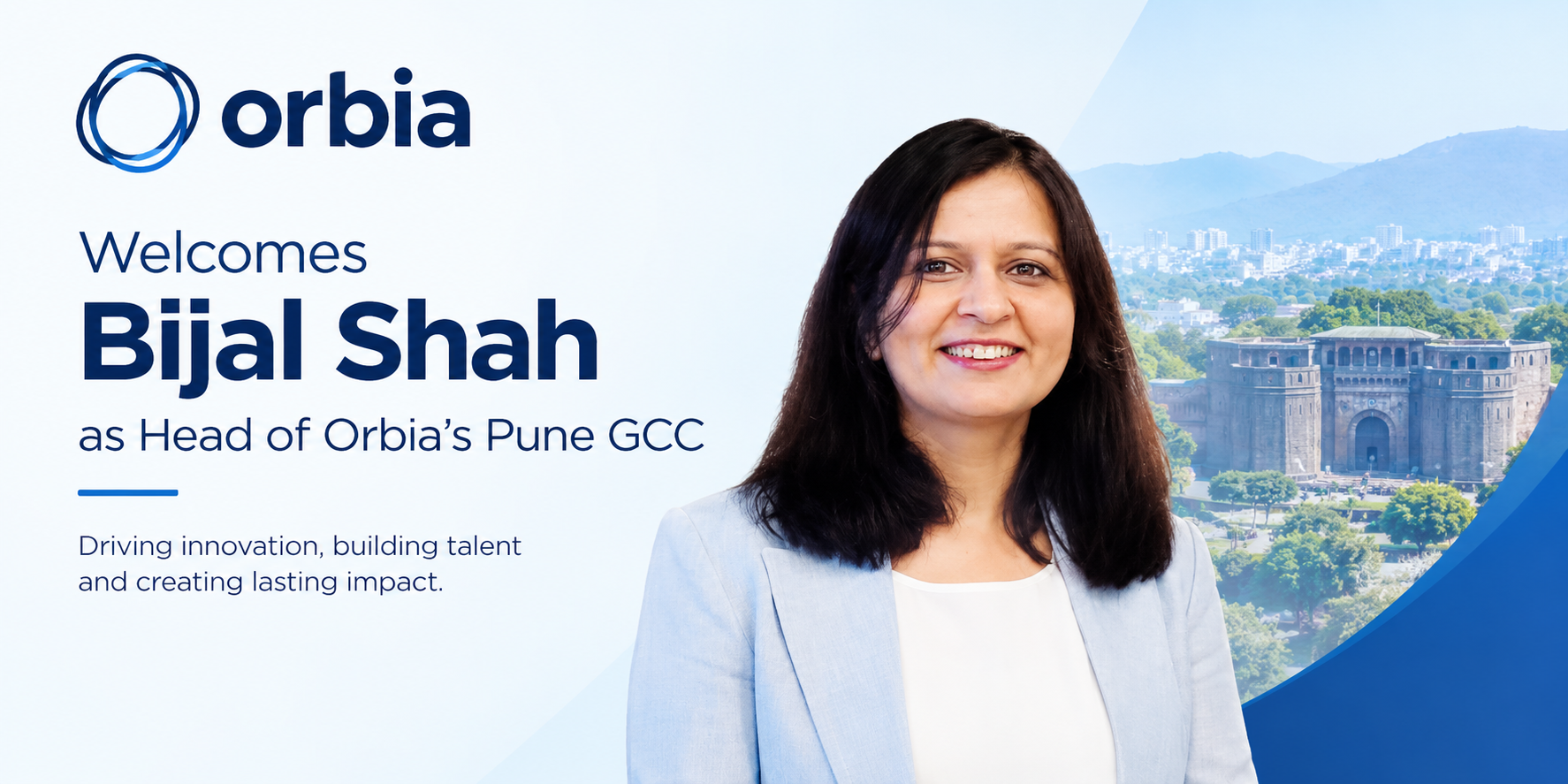
Orbia has appointed Bijal Shah as Head of its Global Capability Centre (GCC) in Pune, bringing more than 23 years of leadership experience across technology, operations, financial services and capability centres.
The appointment marks an important leadership development for Orbia’s India operations as global companies increasingly look to their GCCs to contribute beyond operational delivery and play a greater role in technology, innovation and enterprise-wide transformation.
Shah will focus on strengthening the Pune centre’s contribution to Orbia’s global businesses, with priorities spanning talent development, technology capabilities, innovation and operational excellence.
Bijal Shah Brings More Than Two Decades of Leadership Experience
Before joining Orbia, Shah served as India Country Head and Board Director at Genworth Financial, where she oversaw functions spanning technology, operations, finance, human resources and sourcing.
Her experience across multiple business functions provides a foundation for leading a capability centre that must align local operations with global organisational priorities.
Shah’s career combines technology expertise with broader operational and leadership responsibilities. This background is particularly relevant as GCC leadership roles increasingly require professionals who can connect technology execution, workforce strategy and business performance.
In a LinkedIn post announcing her new role, Shah highlighted her intention to build on the existing foundation of Orbia’s India GCC and expand its contribution through talent, technology, innovation and operational excellence.
She also emphasised the importance of moving beyond execution to establish GCCs as sources of ideas, capabilities and competitive advantage for the wider enterprise.
Orbia Strengthens Its India Capability Centre
Orbia is a global company headquartered in Mexico with businesses spanning water infrastructure, precision agriculture, connectivity solutions, polymer products, and advanced materials for the energy transition.
The company has more than 22,000 employees, commercial activities in over 100 countries and operations in more than 50 countries.
Its diversified business portfolio connects it to several important global priorities, including food and water security, connectivity, decarbonisation and the energy transition.
Within this international structure, India’s technology and operational capabilities can help support collaboration across business units and geographies.
Shah’s appointment provides dedicated leadership for Orbia’s Pune GCC as the company seeks to strengthen the centre’s capabilities and its contribution to global operations.
Why GCC Leadership Is Becoming More Strategic
The appointment comes amid a broader transformation in India’s Global Capability Centre ecosystem.
Many multinational companies initially established Indian centres to access skilled professionals, improve efficiency and support global operations. Over time, these centres have taken on broader responsibilities across technology, analytics, digital transformation and business-critical functions.
Today, the strategic value of a GCC increasingly depends on its ability to deliver measurable business outcomes rather than simply execute assigned tasks.
This shift requires leaders who can:
- Build specialised capabilities: Develop teams with the skills required to support evolving global business needs.
- Connect technology with business strategy: Ensure that technology investments and operational priorities contribute to organisational goals.
- Drive innovation: Encourage teams to identify opportunities for improvement and develop new solutions.
- Strengthen global collaboration: Build effective partnerships between India-based teams and international stakeholders.
- Improve operational excellence: Establish processes and operating models that support consistent, scalable performance.
Shah’s cross-functional experience aligns with these broader requirements for modern GCC leadership.
Pune’s Role in India’s GCC Ecosystem
Pune has developed into an important destination for multinational technology and capability operations, supported by its engineering talent, technology ecosystem and established corporate presence.
For global organisations, the city offers access to professionals across technology, operations and business functions, making it a potential base for building capabilities that serve multiple international markets.
The effectiveness of a GCC, however, depends on more than its location. Its long-term contribution is shaped by leadership, talent development, alignment with global business priorities and the ability to deliver meaningful outcomes.
For Orbia, the focus on strengthening its Pune centre reflects the importance of developing local capabilities that support its broader international business.
From Operational Delivery to Competitive Advantage
One of the central themes in Shah’s stated vision is the transition from execution-focused work to capabilities that create competitive advantage.
This distinction matters for multinational companies operating across complex industries. A strategically positioned GCC can help organisations strengthen technology capabilities, improve processes, develop specialist talent and identify opportunities that benefit the wider enterprise.
The transition requires sustained investment in people, leadership and operating models. It also requires close collaboration between the India centre and global business teams so that local capabilities remain connected to the organisation’s strategic objectives.
For Orbia, talent, technology, innovation and operational excellence are the key areas identified for strengthening the Pune GCC’s contribution.
The company’s next phase will depend on how effectively those priorities translate into capabilities and outcomes for its global businesses.
GCC Lens: What This Appointment Signals
Bijal Shah’s appointment highlights a broader development in India’s GCC landscape: leadership is becoming central to the evolution of capability centres into strategic business partners.
As global organisations expand their Indian operations, they need leaders who can develop talent, coordinate across functions and ensure that local teams contribute to global priorities.
Orbia’s leadership move reflects this changing expectation. The focus is not simply on maintaining an India presence, but on strengthening the centre’s ability to contribute through innovation, technology and operational performance.
The next stage of GCC growth will be shaped not just by the number of centres companies establish, but by the capabilities those centres build and the business value they create.
For Orbia’s Pune GCC, Shah’s appointment sets the leadership direction for that ambition.
Source: The Economic Times GCC, published October 9, 2026.
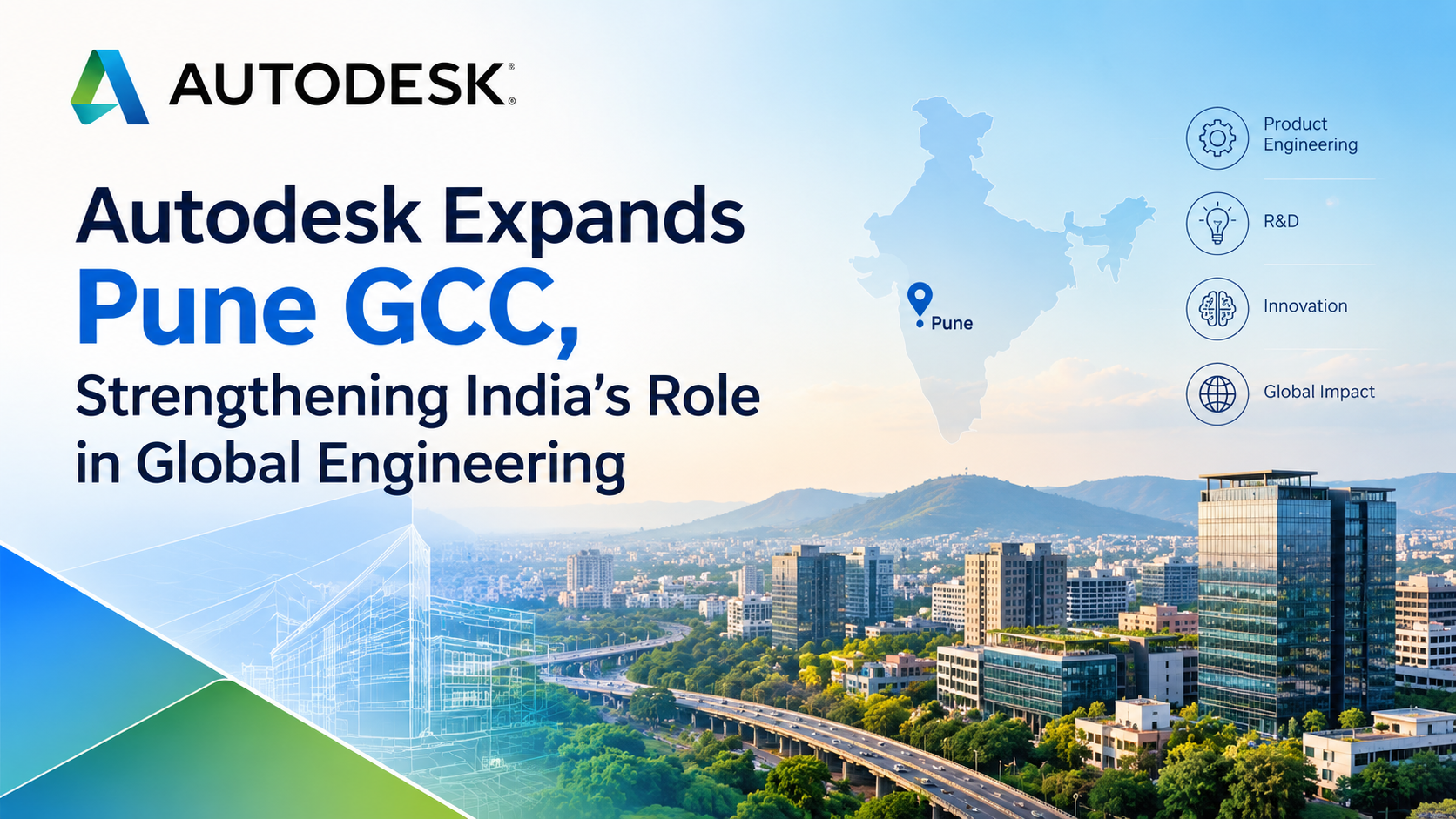
Pune is becoming an increasingly important destination for global engineering and technology centres, and Autodesk’s latest expansion adds another major name to the city’s growing GCC ecosystem.
Design and engineering software company Autodesk has inaugurated a new office in Pune, strengthening its engineering and technology presence in India.
The expansion represents more than an addition to Autodesk’s physical footprint. It reflects the company’s continued investment in India as a strategic location for engineering, product development and global technology capabilities.
From a Small Office to a Large Engineering Community
Autodesk’s India journey began nearly 19 years ago, when the company operated with a small office and a limited number of employees.
Since then, its India operations have evolved into a much broader technology and engineering organisation.
The new Pune facility marks another step in that evolution.
Pankaj Mishra, Site Leader and Director of Software Engineering at Autodesk, announced the office inauguration, describing the milestone as more significant than simply opening a new workspace.
According to Mishra, Autodesk’s Pune operation has developed into a large engineering and technology community driven by its people, ideas and collaboration.
Pune Gains Another Global Engineering Hub
Autodesk’s Pune expansion comes at a time when the city is strengthening its position as a preferred destination for Global Capability Centres.
The city has traditionally benefited from a strong engineering, automotive, manufacturing and technology talent base. Increasingly, global enterprises are using Pune not simply for support operations, but for engineering, R&D, product development and innovation.
Autodesk’s investment fits directly into this broader shift.
The company’s India teams contribute to product development across multiple industries, including:
- Architecture, Engineering and Construction (AEC)
- Manufacturing
- Media and Entertainment
- Product design and engineering
- Technology and software development
This positions Autodesk’s India organisation closer to the core of its global product ecosystem.
India Becomes Autodesk’s Second-Largest Employee Base
The scale of Autodesk’s India operations also highlights the strategic importance of the country.
According to Autodesk’s latest impact report, the company had 2,240 employees in India at the end of fiscal 2026, making India its second-largest employee base globally after the United States.
That workforce footprint indicates how significantly Autodesk’s India operations have evolved from a conventional offshore presence into a strategic technology and engineering capability.
Beyond Cost Arbitrage
The Autodesk story also reflects a broader transformation taking place across India’s GCC landscape.
Global companies are increasingly establishing and expanding centres in India to access specialised engineering talent, accelerate product development and build capabilities that directly support global businesses.
Autodesk’s India operations have already been associated with important areas of its product portfolio, including capabilities supporting AEC and manufacturing workflows. The company has also been expanding its focus on AI and next-generation technology.
Earlier this year, Autodesk executives highlighted India’s depth and quality of technology talent and its growing importance to the company’s global innovation strategy.
Why Autodesk’s Pune Expansion Matters
Autodesk’s new Pune office comes at an interesting moment for the city’s GCC ecosystem.
Pune is increasingly attracting companies looking to establish engineering-led and AI-oriented capability centres. Industry assessments identify engineering talent, mature GCC infrastructure and the city’s strong manufacturing and automotive ecosystem as major advantages.
The Maharashtra government is also targeting significant GCC growth, with a stated ambition to attract around 400 new GCCs and generate four lakh high-skilled jobs under its GCC policy.
Against this backdrop, Autodesk’s expansion adds further momentum to Pune’s emergence as an engineering and technology hub.
The Bigger GCC Trend
The significance of Autodesk’s Pune investment goes beyond one company or one office.
India’s GCC landscape is moving from a delivery-centre model toward a capability and innovation model.
The next generation of GCCs is increasingly expected to contribute to:
Product Engineering → R&D → AI & Data → Innovation → Global Product Ownership
Autodesk’s growing India footprint demonstrates this transition in action.
With more than two decades of evolution across its India operations and a workforce of over 2,000 employees, the company is increasingly leveraging India as a strategic technology base rather than simply an execution location.
GCC Lens
Autodesk’s Pune expansion is another signal that India’s GCC story is entering a more mature phase.
The question is no longer whether global companies will build technology capabilities in India.
The bigger question is how much of their global product, engineering and innovation agenda will increasingly be driven from India.
Autodesk’s expanding footprint suggests the answer could be: a lot more.
New GCC
HMH Inaugurates New Pune Office, Strengthening Its Innovation and Engineering Presence in India

Pune, India: HMH has marked another significant milestone in its India growth journey with the inauguration of its new office in Pune, reinforcing the company’s long-term commitment to innovation, engineering excellence, and global collaboration.
The inauguration ceremony was attended by Jack Lynch, Chief Executive Officer of HMH, and Jaya Wadhwani, Senior Vice President of Engineering and Country Manager, HMH Tech India. Their presence underscores the strategic importance of HMH Tech India in supporting the company’s global technology initiatives and driving innovation across its worldwide operations.
The newly opened Pune office has been designed to create a collaborative, modern, and innovation-focused work environment. The workspace aims to encourage stronger teamwork, knowledge sharing, and cross-functional collaboration while providing employees with a dynamic environment to build next-generation educational technology solutions.
As HMH continues to expand its engineering capabilities, the Pune facility is expected to play an increasingly important role in product development, digital transformation, and technology innovation. The investment reflects the organization’s confidence in India’s talent ecosystem and its growing contribution to HMH’s global business objectives.
The new office also highlights HMH’s commitment to creating an engaging workplace that supports employee growth, fosters innovation, and strengthens collaboration across global teams. By investing in world-class infrastructure, the company is positioning its India operations as a key strategic hub for engineering excellence and product innovation.
The inauguration represents more than just the opening of a new workspace—it marks the beginning of the next phase of HMH’s expansion in India. With enhanced facilities and an expanding team, HMH Tech India is well-positioned to contribute to the company’s mission of delivering innovative learning solutions to educators and learners around the world.
As HMH celebrates this milestone, the company looks ahead to continued growth, stronger collaboration, and accelerated innovation, further cementing India’s role as a critical part of its global technology and engineering network.
-

 Business6 months ago
S&P Global Expands India Footprint with New Gurugram Hub
-
 Politics7 months ago
Maximus Expands Hyderabad GCC: Strengthening India’s Role in Global Healthcare & Public Sector Operations
-

 Press Release6 months ago
KnowVisory Global Launches Payroll Processing and Administration Services to Simplify Compliance for Growing Businesses
-

 Bengaluru6 months ago
Abercrombie & Fitch Enters India’s GCC Landscape with Bengaluru Launch
-

 Bengaluru2 months ago
DePuy Synthes Selects Bengaluru for New GCC, Targets 500 Hires
-

 Bengaluru5 months ago
Commonwealth Bank Appoints Shubha Iyer as CEO of CommBank India to Strengthen GCC and Digital Transformation Strategy
-
 New GCC4 months ago
Generac Launches First India Global Capability Center in Pune
-

 Business7 months ago
GCC in Coimbatore: Why It’s the Next Big Hub for Global Capability Centers