
Business
Transforming GCC Leadership: How Shared Ownership is Redefining India’s Role in Global Enterprises

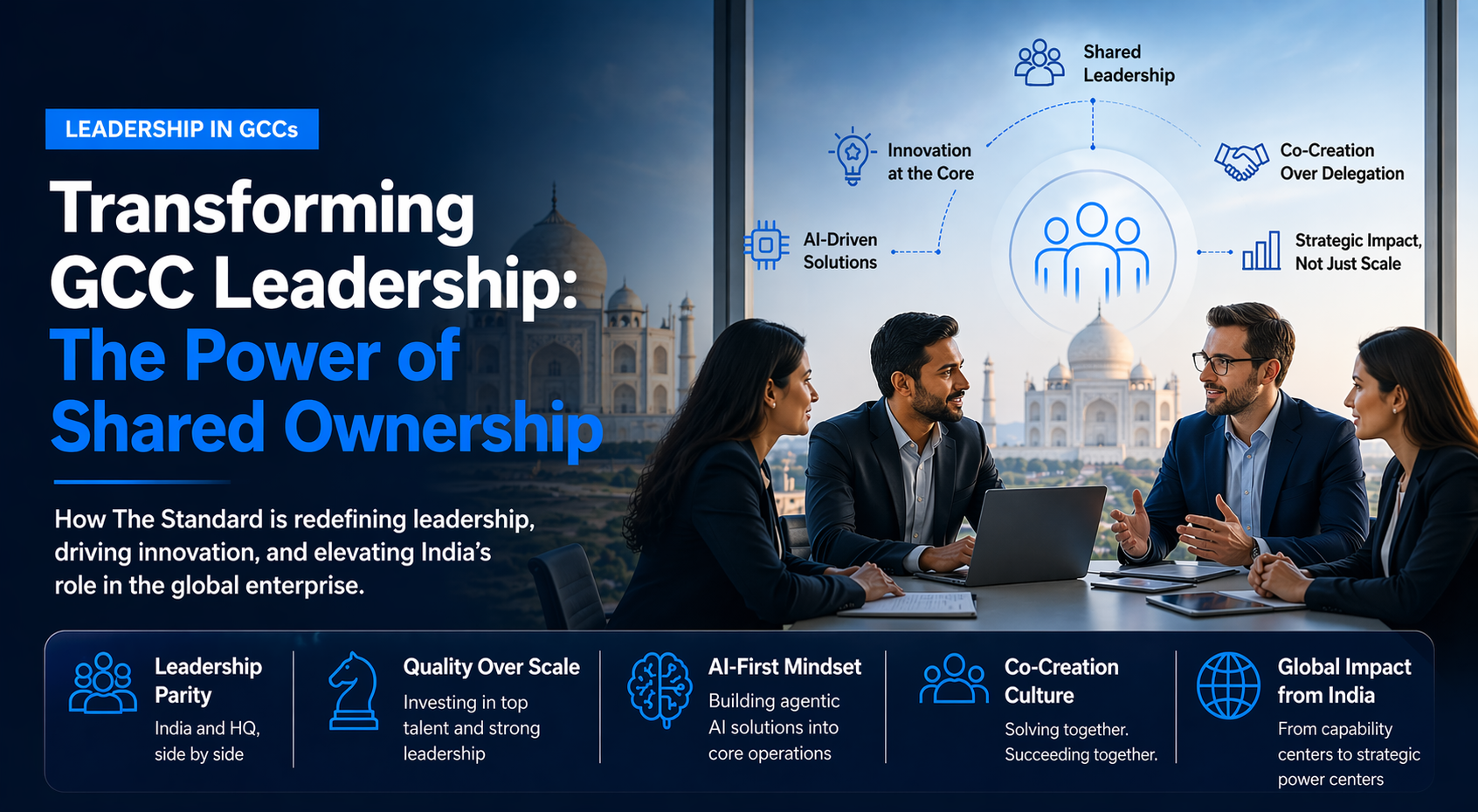
Global Capability Centers (GCCs) in India are undergoing a structural shift—from execution-focused delivery hubs to strategic innovation engines. At the center of this transformation is a new leadership philosophy: shared leadership.
A compelling example of this evolution comes from The Standard, a US-based financial services firm, which is reimagining how leadership operates within its India GCC. Their approach signals a broader change in how global organizations view talent, ownership, and innovation in India.
The Shift from Hierarchy to Shared Leadership
Traditionally, GCCs operated within a clear hierarchy—where decision-making remained at headquarters and India teams executed predefined tasks.
That model is being actively dismantled.
The Standard is introducing a “two-in-a-box” leadership model, where leaders in India mirror their global counterparts across functions such as technology, data, and engineering. This structure ensures:
- Parallel leadership between HQ and GCC
- Joint ownership of outcomes
- Faster, more aligned decision-making
Instead of functioning as an extension, the India GCC becomes an equal strategic partner.
From Cost Efficiency to Value Creation
For years, GCCs in India were primarily built around cost arbitrage and operational efficiency. That narrative is rapidly becoming obsolete.
Today’s leading GCCs—including The Standard—are focused on:
- High-value problem solving
- Product and solution innovation
- Enterprise-wide transformation initiatives
This aligns with the broader industry trend where GCCs are evolving into innovation hubs rather than support centers
The Standard’s intent is clear: leapfrog into high-impact work rather than gradually evolve into it.
Leadership Hiring: Quality Over Scale
A notable strategic decision in this transformation is the focus on leadership density, not headcount growth.
Instead of scaling teams rapidly, the emphasis is on:
- Hiring top-tier leaders across functions
- Building strong leadership parity with global teams
- Creating empowered, decision-making units within India
This reflects a deeper understanding: capability is driven by leadership quality, not team size.
Building AI-Driven Capabilities from the Core
Another defining pillar of this GCC transformation is the focus on agentic AI solutions.
Rather than experimenting on the sidelines, The Standard is embedding AI into core business processes, particularly in insurance operations.
Key aspects of this approach include:
- Developing AI solutions aligned with real business needs
- Integrating AI directly into operational workflows
- Using AI as a competitive differentiator
This mirrors the broader GCC shift where AI is moving centers toward judgment-driven, high-value work instead of repetitive execution
Co-Creation Over Delegation
One of the most important cultural shifts underpinning this model is the move from delegation to co-creation.
In a shared leadership setup:
- Teams collaborate across geographies
- Solutions are built jointly, not handed off
- Accountability is shared, not siloed
This eliminates the traditional “offshore vs HQ” divide and replaces it with a unified operating model.
Culture as a Strategic Lever
Beyond structure and technology, culture plays a defining role in this transformation.
The Standard is intentionally building a culture that reflects its global values while adapting to local dynamics. The focus is on:
- Alignment with enterprise vision
- Collaboration across borders
- Long-term capability building
Increasingly, culture is becoming a measurable driver of GCC success—not just an abstract concept
India’s Expanding Role in Global Strategy
India is no longer just a talent pool—it is becoming a strategic nerve center for global organizations.
With access to deep expertise in:
- Technology and engineering
- Data and analytics
- AI and digital transformation
GCCs in India are now positioned to influence enterprise-wide decisions and innovation agendas.
The shared leadership model accelerates this transition by giving India teams ownership, visibility, and strategic responsibility.
Conclusion: The Future is Distributed Leadership
The evolution of GCCs is no longer about scaling operations—it’s about redefining how global organizations operate.
The Standard’s shared leadership approach offers a blueprint for the future:
- Distributed leadership instead of centralized control
- Co-creation instead of execution
- Innovation instead of cost efficiency
As more enterprises adopt this model, India’s GCCs will not just support global businesses—they will help lead them.

chnology centers, and strategic business operations in India. The initiative aligns with the state’s broader vision of becoming a leading destination for global investment, digital transformation, and knowledge-based industries.
Driving the Next Wave of GCC Growth
As Global Capability Centres continue evolving into strategic engines of innovation, analytics, technology development, and business transformation, Indian states are increasingly competing to attract multinational investments.
Through this partnership, Kerala aims to showcase its growing technology ecosystem, highly skilled workforce, robust educational infrastructure, and favorable business environment. The initiative will focus on engaging global enterprises that are exploring India as a destination for new GCC setups and expansion opportunities.
The collaboration is expected to create a structured framework for investment promotion, industry engagement, and ecosystem development.
Leveraging Kerala’s Talent Advantage
Kerala has emerged as a strong contender in India’s technology and knowledge economy, supported by its high literacy rates, engineering talent pool, and growing startup ecosystem.
With globally recognized educational institutions and an increasing number of technology professionals, the state offers organizations access to skilled talent across:
- Information Technology
- Software Engineering
- Artificial Intelligence
- Data Analytics
- Finance and Accounting
- Business Operations
- Shared Services
- Digital Transformation
The partnership seeks to leverage these strengths to attract companies seeking scalable and future-ready operational capabilities.
Creating Opportunities for Economic Growth
The anticipated influx of GCCs and IT investments is expected to generate significant economic benefits for the state, including:
- Creation of high-value employment opportunities
- Increased foreign direct investment (FDI)
- Expansion of technology infrastructure
- Growth of ancillary service industries
- Enhanced innovation and entrepreneurship
As multinational organizations establish operations in Kerala, local businesses and educational institutions are also expected to benefit from increased collaboration and knowledge exchange.
Strengthening India’s Expanding GCC Ecosystem
India remains the world’s largest GCC destination, hosting thousands of centers that support global operations across technology, finance, healthcare, manufacturing, retail, and professional services sectors.
The Kerala–Inductus partnership reflects a broader trend of emerging GCC destinations beyond traditional hubs such as Bengaluru, Hyderabad, Pune, Chennai, and Gurugram. States are increasingly focusing on creating specialized ecosystems that offer talent, infrastructure, and business-friendly policies to global enterprises.
Outlook
The partnership between the Kerala Government and Inductus Group represents an important step toward positioning the state as a preferred destination for GCCs and technology investments. As global enterprises continue expanding their India operations, Kerala’s focus on talent development, digital infrastructure, and investment facilitation could help unlock new opportunities for economic growth and innovation.
With demand for GCCs projected to remain strong in the coming years, initiatives such as this are expected to play a critical role in shaping the next phase of India’s global capability centre growth story.
Data Source : Link
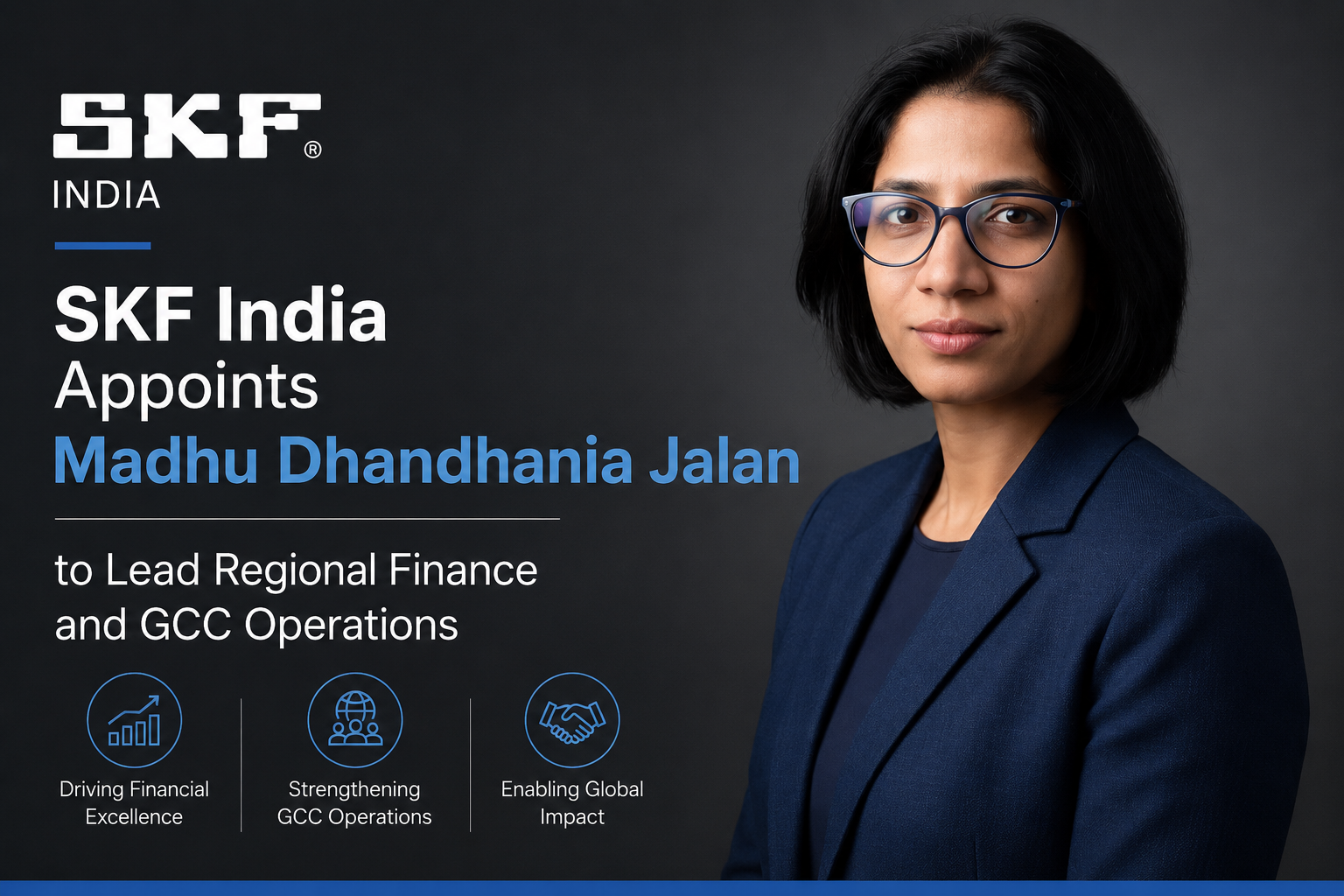
Strategic Leadership Move Strengthens SKF’s Global Capability Centre and Finance Functions
SKF India has announced the appointment of Madhu Dhandhania Jalan as the Head of Regional Finance and Global Capability Centre (GCC) Operations. The appointment underscores the company’s commitment to strengthening its financial leadership and enhancing the strategic role of its Global Capability Centre in supporting worldwide business operations.
With extensive experience in finance transformation, business strategy, operational excellence, and global shared services, Madhu Dhandhania Jalan is expected to play a pivotal role in driving SKF’s regional financial performance while accelerating the growth and maturity of its GCC operations.
Enhancing the Strategic Value of the GCC
As Global Capability Centres increasingly evolve from support functions into strategic business enablers, leadership appointments such as this reflect the growing importance of integrated finance and operational excellence. In her new role, Jalan will oversee regional finance activities while guiding the GCC’s contribution to innovation, process optimization, digital transformation, and business support functions.
The move aligns with SKF’s broader vision of creating agile, data-driven, and globally connected operations that can support business growth across multiple markets.
Bringing Extensive Leadership Experience
Madhu Dhandhania Jalan brings a strong background in financial management, transformation initiatives, governance, risk management, and shared services operations. Her experience spans leading cross-functional teams, improving operational efficiencies, and implementing scalable processes across global organizations.
Her expertise is expected to help SKF further strengthen its finance ecosystem while enhancing the capabilities and strategic impact of its GCC operations.
GCCs Continue to Expand Their Leadership Footprint
The appointment highlights an emerging trend across Global Capability Centres where finance leaders are increasingly taking on broader operational responsibilities. Modern GCCs are no longer limited to transactional support but are becoming centres of excellence for analytics, automation, finance transformation, technology innovation, and strategic decision-making.
Organizations are investing in experienced leaders who can bridge finance, operations, technology, and business strategy to create greater enterprise value.
SKF’s Continued Focus on Operational Excellence
SKF has long been recognized for its engineering expertise, manufacturing excellence, and commitment to innovation. Strengthening its leadership team through strategic appointments reinforces the company’s focus on operational efficiency, customer value, and long-term business growth.
The GCC plays a critical role in supporting these objectives by delivering specialized capabilities, process excellence, and scalable business services across the organization.
Outlook
As enterprises continue to expand and modernize their Global Capability Centres, leadership talent will remain a key differentiator. Madhu Dhandhania Jalan’s appointment reflects SKF India’s commitment to building a future-ready organization where finance leadership and GCC operations work together to drive innovation, efficiency, and sustainable growth.
Data source : Link
Bengaluru
Zimmer Biomet Expands India Presence with New Bengaluru GCC to Drive Global Healthcare Innovation
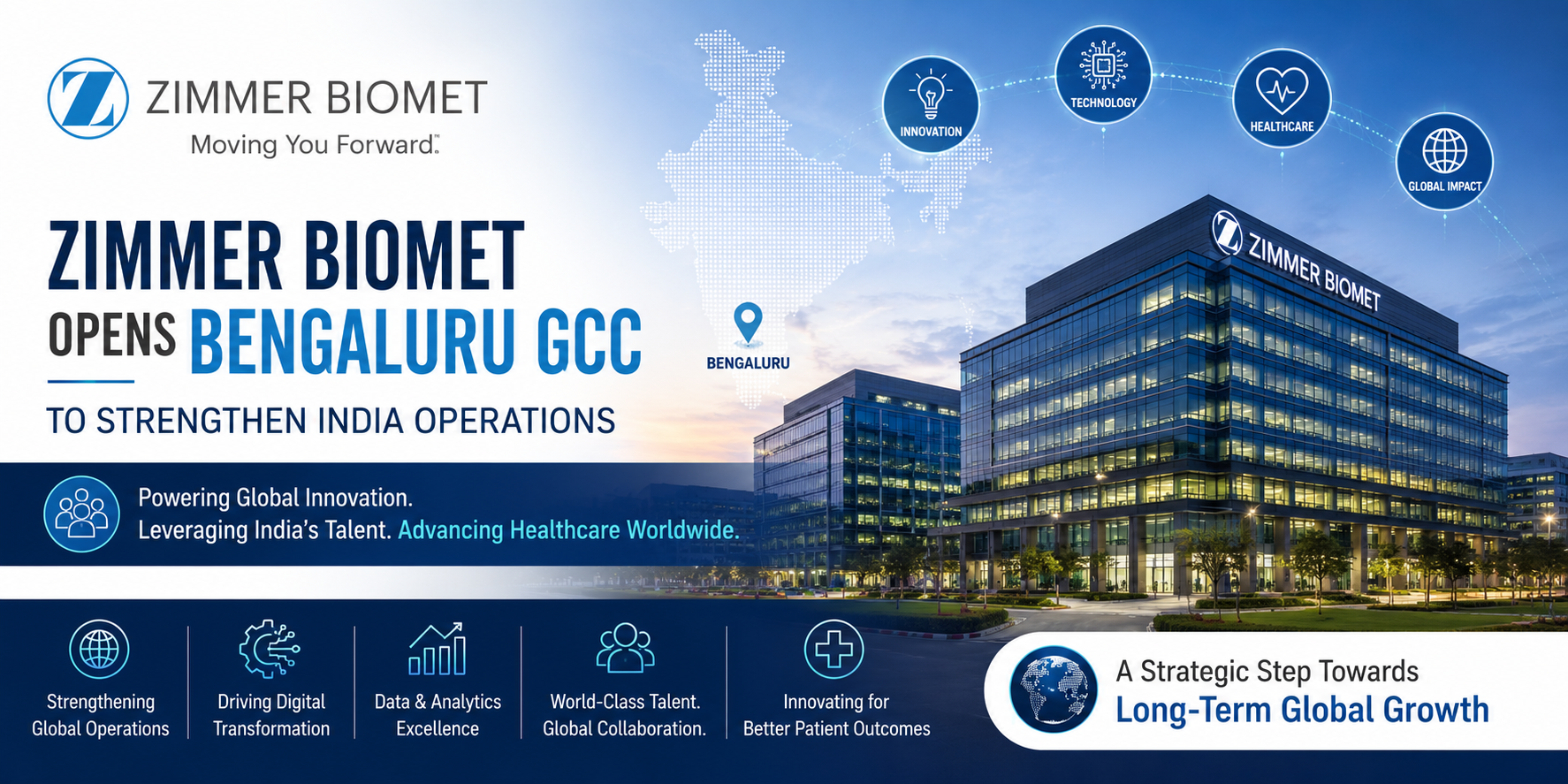
Global medical technology leader Zimmer Biomet has strengthened its India operations with the launch of a new Global Capability Centre (GCC) in Bengaluru, reinforcing the country’s growing role in the global healthcare and medical technology ecosystem.
The new Bengaluru GCC marks a significant milestone in Zimmer Biomet’s long-term global transformation and innovation strategy. The company aims to leverage India’s deep technology talent pool and digital capabilities to accelerate enterprise innovation, operational excellence, and healthcare technology development.
India continues to emerge as a strategic destination for multinational healthcare and medtech companies establishing advanced capability centres focused on digital engineering, analytics, AI, and business transformation.
Bengaluru GCC to Support Global Operations
Zimmer Biomet’s India GCC will play a critical role in supporting the company’s global business functions, including technology innovation, digital platforms, enterprise analytics, and operational services.
The Bengaluru centre is expected to bring together specialized talent across:
- Digital engineering
- Enterprise technology
- Data analytics
- Shared business services
- Healthcare technology innovation
- Operational support functions
According to the company, the GCC will serve as a strategic hub designed to improve scalability, collaboration, and enterprise-wide efficiency across its global operations.
India Becomes Strategic Growth Hub for MedTech GCCs
The launch reflects the growing importance of India in the global healthcare technology sector. GCCs in India are increasingly moving beyond traditional support functions to become innovation-led centers driving product development, AI adoption, automation, and digital transformation.
Zimmer Biomet emphasized that the India GCC will contribute to connected devices, data-driven platforms, and high-impact digital solutions that improve patient outcomes and operational workflows globally.
The company’s investment aligns with the broader industry trend of global healthcare firms expanding their GCC footprints in India to access skilled engineering talent and accelerate digital innovation initiatives.
Focus on Digital Transformation and Innovation
The Bengaluru GCC is expected to support Zimmer Biomet’s enterprise modernization efforts while enhancing collaboration across global teams.
The company plans to build capabilities around:
- Advanced analytics and AI
- Digital healthcare platforms
- Enterprise IT transformation
- Product lifecycle support
- Operational process optimization
- Scalable global business services
The move highlights how GCCs are evolving into strategic innovation hubs that directly contribute to business growth and technology leadership.
Bengaluru Continues to Lead India’s GCC Ecosystem
Bengaluru remains India’s leading GCC destination due to its mature technology ecosystem, strong engineering talent base, and robust startup culture. The city continues to attract multinational corporations across healthcare, aerospace, fintech, SaaS, and engineering sectors.
India’s GCC market is witnessing rapid expansion as global organizations increasingly establish centers focused on high-value functions such as AI, cloud computing, cybersecurity, digital engineering, and R&D.
Industry experts believe healthcare and medtech GCCs will become one of the fastest-growing segments within India’s broader GCC landscape over the next few years.
Strengthening Healthcare Innovation Through India
Zimmer Biomet’s expansion demonstrates how global healthcare organizations are using India not only for operational scalability but also for innovation-driven growth.
As demand for connected healthcare technologies, intelligent systems, and data-driven patient solutions rises globally, India-based GCCs are expected to play a larger role in supporting enterprise innovation and digital healthcare transformation.
The Bengaluru GCC is likely to strengthen Zimmer Biomet’s ability to build future-ready healthcare technologies while enhancing its global delivery and operational capabilities.
Source : Link
-

 Business6 months ago
S&P Global Expands India Footprint with New Gurugram Hub
-
 Politics7 months ago
Maximus Expands Hyderabad GCC: Strengthening India’s Role in Global Healthcare & Public Sector Operations
-

 Press Release6 months ago
KnowVisory Global Launches Payroll Processing and Administration Services to Simplify Compliance for Growing Businesses
-

 Bengaluru6 months ago
Abercrombie & Fitch Enters India’s GCC Landscape with Bengaluru Launch
-
 New GCC4 months ago
Generac Launches First India Global Capability Center in Pune
-

 Bengaluru2 months ago
DePuy Synthes Selects Bengaluru for New GCC, Targets 500 Hires
-

 Bengaluru5 months ago
Commonwealth Bank Appoints Shubha Iyer as CEO of CommBank India to Strengthen GCC and Digital Transformation Strategy
-

 Business7 months ago
GCC in Coimbatore: Why It’s the Next Big Hub for Global Capability Centers